

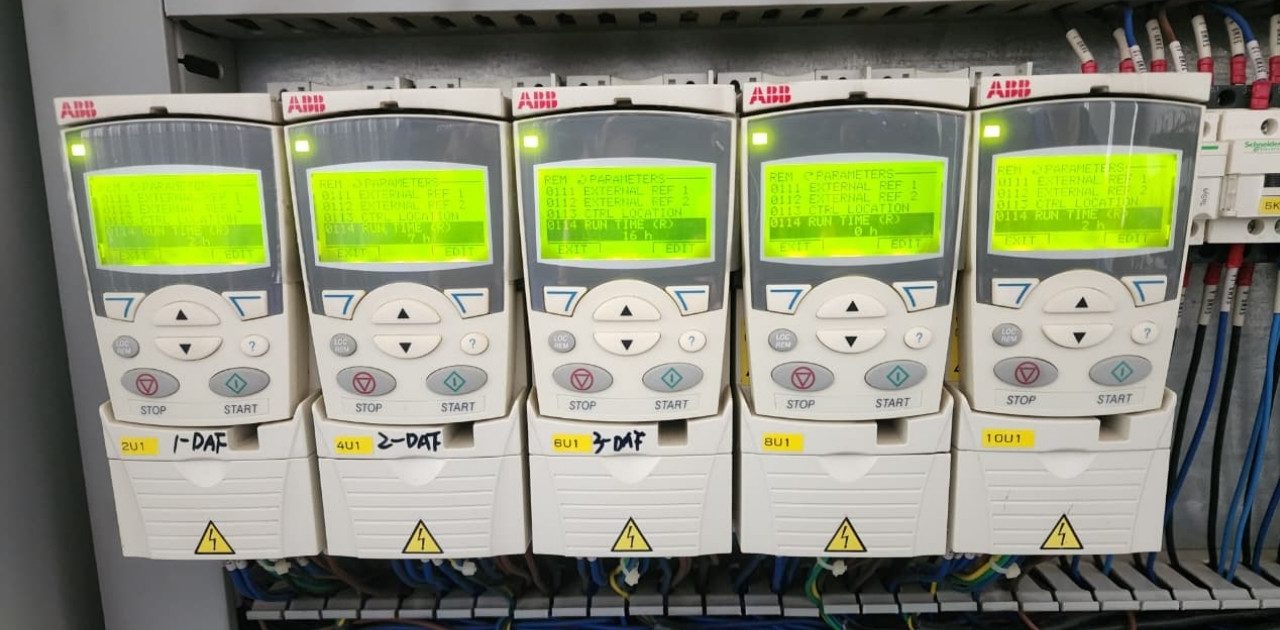
VFD failure and prevention: Real Engineering Lessons from the Field
VFD Failure and Prevention is key to longer drive life. VFD Failure and Prevention reduces downtime.
VFD failure and prevention – why do variable frequency drives suddenly blow capacitors, trip on over‑current, or roast IGBTs at 2 a.m.? Let’s walk through what really happens inside those cabinets engineers trust to keep motors spinning and plants running.
- VFD failure and prevention: Real Engineering Lessons from the Field
- 1. What a VFD Really Does
- 2. How a VFD Works (Simple U.S. Plant View)
- 3. Why VFD Reliability Matters in U.S. Industries
- 4. Typical Causes of VFD Failure
- 5. Troubleshooting and Safety Steps
- 6. Best Practices for VFD Failure Prevention
- 7. Field Scenarios
- 8. Hidden Lessons Engineers Rarely Mention
- 9. Tables
- FAQs for VFD Failure and Prevention
- 13. DC‑Bus Voltage Calculator
- 14. Final Summary
1. What a VFD Really Does
A variable‑frequency drive (VFD) is an electronic chameleon—it feeds AC motors with adjustable frequency and voltage.
That’s how you can ramp a 100‑HP induction motor from zero to full speed without slamming contactors like in the old days.
In one line: the VFD provides control, energy savings, and softer motor starts… until it doesn’t.

2. How a VFD Works (Simple U.S. Plant View)
Picture three stages:
- Rectifier – Converts incoming 480 V AC to DC.
- DC‑Bus – Uses electrolytic capacitors to store and smooth energy.
- Inverter – Switches DC back into variable‑frequency AC using IGBTs.
When you give command 45 Hz instead of 60 Hz, the inverter outputs a clean PWM waveform at that frequency.
If any part of this chain hiccups—excess heat, harmonic distortion, ground leakage, you’re on your knees checking fuses again.
3. Why VFD Reliability Matters in U.S. Industries
- Power plants: Forced‑draft fans, cooling pumps, and conveyors rely on smooth speed control.
- Factories: From conveyor belts to extruders, production halts when a VFD trips.
- EV infrastructure: Chargers and cooling pumps use smaller VFD modules—failure means downtime and lost revenue.
- Water treatment: Pump cavitation and motor stress depend heavily on voltage stability.
Downtime equals money. A 200‑HP motor sitting idle for an hour can cost thousands in lost output. That’s why prevention isn’t optional.
4. Typical Causes of VFD Failure
You’d be surprised how many drives I’ve replaced, not because they were bad, but because the installation was.
Here are the usual suspects.
| Cause | What Really Happens | Typical Field Symptom |
|---|---|---|
| Overheating | Blocked vents, undersized panels, or 24/7 full load | Trip or IGBT thermal failure |
| Power surge / lightning | Poor surge suppression or no line reactor | DC‑bus capacitor bulge or explosion |
| Grounding faults | Multiple grounds or floating shields | Nuisance over‑current trips |
| Cable length too long | Reflected waves fry motor insulation | Motor bearing pitting |
| Contaminated air | Dust, oil mist, conductive debris | Corroded boards, random resets |
| Improper parameter setup | Wrong motor FLA, no ramp limits | Drive trips on accel/decel |
| Harmonics / imbalance | Nonlinear load sharing | Unexplained drive resets |
If you see a drive that “randomly” dies every six months, grab your clamp meter—not your screwdriver.
5. Troubleshooting and Safety Steps
To Avoid VFD Failure and Prevention Always lock‑out/tag‑out first.
Then, follow this boot‑tested checklist:
- Visual inspection: Burn marks, bulged caps, and discolored PCBs don’t lie.
- Power check: Measure DC‑bus voltage—it should be about 1.35 × line V (approx. 650 Vdc on 480 Vac).
- Control signals: Verify 0–10 V or 4–20 mA inputs aren’t floating.
- Motor insulation: Megger test; any reading below 1 MΩ indicates pending doom.
- Cooling path: Airflow sensors, filters, and fans must be clean.
- Reload defaults: I’ve witnessed parameters corrupted by noise or bad EEPROM sectors.
Always use a true‑RMS meter rated for VFD outputs—cheap ones lie badly on PWM waves.
6. Best Practices for VFD Failure Prevention
Field lessons in one breath:
- Keep the ambient temperature below 40 °C; for every 10 °C increase, reduce the capacitor’s life by 10%.
- Use line reactors or dv/dt filters with cables over 50 ft.
- Ground properly—one single‑point connection for drive and motor.
- Isolate control wiring from power cables.
- Add fans or thermostats in dusty MCC rooms.
- Maintain firmware and backup parameters.
- Install surge suppressors on the mains and load side.
- Schedule thermographic scans twice a year.
| Operating Factor | Recommended Practice | Expected Benefit |
|---|---|---|
| Panel temperature | ≤ 40 °C | Capacitor life extended 2× |
| Humidity | < 85% RH non‑condensing | Prevent PCB corrosion |
| Cable length | ≤ 50 ft or use filters | Motor insulation safety |
| Ground resistance | < 5 Ω | Noise mitigation |
| Input voltage imbalance | < 2% | Smooth DC‑bus current |
7. Field Scenarios
Power Plant Fan Drive
We once had a 250 kW draft‑fan VFD failing every six months.
Root cause? A dust‑clogged filter behind the cabinet door that maintenance never opened.
After adding a differential pressure switch and temp alarm, there have been zero failures in three years.
Factory Extruder
A packaging plant’s drive kept tripping on overcurrent at startup.
Turns out someone changed the motor and forgot to update the FLA rating in the parameters.
Once corrected, the drive ran smoothly.
EV Charging Station
At an EV site in Texas, the coolant pump failed due to harmonics caused by an undersized transformer.
Solution: added an isolation transformer and an input reactor; problems vanished.
PLC‑Networked MCC
A fertilizer blending system had random VFD resets.
EMI from long, unshielded Modbus cables invaded analog signal lines.
Rerouted wiring, added ferrite cores and issue solved.
Commercial HVAC
A 40‑HP VFD in a rooftop unit failed after a thunderstorm.
The nearest lightning arrestor was 80 ft away.
Installed a surge protector at the drive panel.
Next storm? Still running.
8. Hidden Lessons Engineers Rarely Mention
This is the “information gain” section: real‑life insider notes that you won’t find in manuals.
- Control wire shield bonds: Connect one side only—both ends create ground loops that breed ghosts in analog readings.
- Capacitor aging: Capacitors over 5 years old gradually lose capacitance. Plan replacements during shutdowns, not after explosions.
- Fan bearing failure: Cooling fan failure is the “silent killer.” Replace those tiny fans during annual shutdowns.
- Storage neglect: Spare drives stored for more than 9 months need capacitor reforming (gradual DC charging).
- Power factor correction traps: Never put capacitors ahead of a VFD—they resonate at the switching frequency and roast the input rectifiers.
These small oversights cause more midnight calls than firmware bugs.
9. Tables
Table 1: Common VFD Fault Codes and Quick Actions
| Fault Code | Meaning | Field Action |
|---|---|---|
| OC | Over‑current | Check motor short, overload, accel rate |
| OV | Over‑voltage | Add braking resistor or check regen |
| GF | Ground fault | Verify cable insulation, grounding |
| OH | Over‑heat | Clean filters, check cooling fans |
| LU | Under‑voltage | Investigate supply dips or loose terminals |
Table 2: Expected Life of Key VFD Components
| Component | Typical Life (hours or cycles) | Field Failure Sign |
|---|---|---|
| DC capacitors | 20,000–40,000 | Leakage, swelling |
| Cooling fans | 15,000–25,000 | Noise, low airflow |
| IGBTs | 50,000+ (depends) | Short or open leg |
| Relays / contactors | 100,000 cycles | Sticking, dropouts |
FAQs for VFD Failure and Prevention
1. What’s the most common reason a VFD fails?
Overheating from poor ventilation or dirty filters probably tops the list. Electronics hate heat; keep them cool, and 80 % of your trouble disappears.
What’s the most common reason a VFD fails?
Overheating from poor ventilation or dirty filters probably tops the list. Electronics hate heat; keep them cool, and 80 % of your trouble disappears.
Can poor grounding damage a VFD?
Absolutely. Stray currents can rip through IGBTs and control boards. Always verify a single‑point, low‑impedance ground.
Should surge protectors be used on both sides?
Yes. Use MOV‑based protectors on the input and RC snubbers or dv/dt filters on the output.
4. How do long motor cables hurt drives?
Reflected voltage spikes bounce back from the motor terminals, doubling line peaks and punching through insulation.
Why do drives trip on overcurrent during acceleration?
Usually, wrong accel time or incorrect motor data. Let the drive ramp more gently.
What’s the safe megger value for a VFD motor?
At least 1 MΩ per kV rating is a conservative starting point.
Can I install a VFD outdoors?
Only if it’s NEMA 4X or better, with derating for ambient and humidity.
Is harmonics control really needed?
Yes, drives are nonlinear loads. Unchecked harmonics overheat transformers and feeders.
Why replace cooling fans early?
Because $20 fans protect $2000 drives. Enough said.
Does EMI affect analog signals?
Yes. Keep signal cables twisted, shielded, and separated from power lines.
Can power factor correction be upstream of a VFD?
Only with properly detuned reactors. Direct capacitors cause resonance.
How often should parameters be backed up?
After every commissioning change and annually via the keypad or software.
Can VFD failures affect PLC communication networks?
Yes, through EMI. Use fiber optics or shielded serial cables.
What’s capacitor reforming?
Gradually recharging stored VFDs to restore dielectric integrity.
Are refurbished VFDs reliable?
If re‑capped, cleaned, and tested under load. yes, often as good as new.
What cable type suits VFD outputs?
Use VFD‑rated cable with symmetrical grounds and foil shields, per IEEE 519 guidance.
Should I oversize the drive?
Typically, 10 %-15 % oversizing improves thermal life, especially in harsh sites.
Can firmware glitches mimic hardware failure?
Yes, wrong parameters or old firmware can cause ghost faults.
Are braking resistors safe to mount inside panels?
Not usually. They need airflow or external mounting; they get hot fast.
How to confirm DC‑bus capacitor health?
Measure ripple with an oscilloscope or use ESR meters during shutdowns.
13. DC‑Bus Voltage Calculator
DC‑Bus Voltage Calculator (HTML implementation idea):
Input: AC line V → Output: DC‑Bus = 1.35 × Line V.
14. Final Summary
If you’ve worked around drives long enough, you know they’re both heroes and hand grenades.
Eighty percent of VFD failure and prevention boils down to simple discipline: keep them cool, clean, grounded, and parameterized right.
From what I’ve seen, successful plants treat their VFDs like vital organs, not disposable gadgets.
Do the same, and your drives will outlive the motors they control.
