

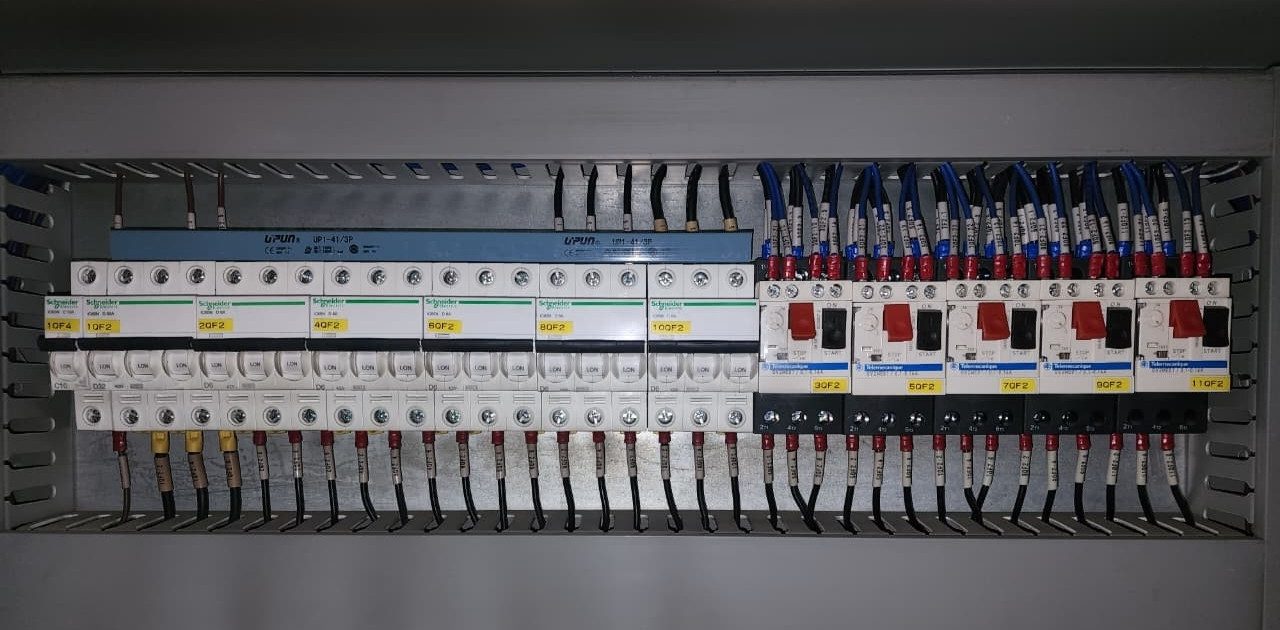
Circuit Breaker Troubleshooting starts the moment that familiar click cuts power.
Ever wonder why breakers trip when nothing seems wrong? For engineers like me, that click is data – a precise signal from physics reminding us that current always tells the truth.
- Circuit Breaker Troubleshooting Explained
- The Concept of Circuit Breaker Troubleshooting
- How Circuit Breaker Troubleshooting Works in Practice
- Importance and Applications Across USA Industries
- Common Mistakes and Failures During Circuit Breaker Troubleshooting
- Troubleshooting and Safety Checklist
- Practical Tips and Best Practices for Circuit Breaker Troubleshooting
- Real World Industrial and Residential Scenarios
- Hidden Insights Professionals Often Overlook
- Final Summary and Professional Takeaway
- FAQs and Field Lessons for Circuit Breaker Troubleshooting

Fig-1: Circuit Breaker Troubleshooting for EV charging station breaker overheating issue
Circuit Breaker Troubleshooting Explained
I’ve spent half a century working on switchgear from dusty fertilizer plants to laboratories laced with PLC networks. In every one of those places, I’ve heard the same sharp “click” that signals a circuit opening for its own protection. Circuit Breaker Troubleshooting is not an abstract theory. It’s the detective work every qualified person must master to keep equipment and people safe.
The Concept of Circuit Breaker Troubleshooting
At its core, Circuit Breaker Troubleshooting means understanding why a protective device decided enough was enough. You’re tracing an electrical immune system response. A breaker trips for only three physical reasons: overload, short circuit, or ground fault. Everything else—loose terminals, bad insulation, or a missing neutral, only feeds those three.
In practical terms we:
- Observe when and how it trips.
- Measure current (I) and voltage (V).
- Compare readings with design limits.
- Act based on verified data, not instinct.
That process, repeated methodically, separates engineers from button‑pressers.
How Circuit Breaker Troubleshooting Works in Practice
Inside any breaker lives both a thermal element that reacts to steady overload and a magnetic coil ready for faults. During circuit breaker troubleshooting, you watch both timelines.
If heat builds slowly, bimetal deflection is your culprit. If the trip is instant with a flash, magnetic action took over.
The golden formula never lies:
Ploss = I2R
Every extra amp heats copper exponentially. Circuit breaker troubleshooting always begins by asking how much current was flowing when that heat built up.
Table 1 Typical Trip Characteristics
| Breaker Rating | Safe Continuous Load (80%) | Trip Time at 200% | Common Use |
|---|---|---|---|
| 15 A | 12 A | 5 – 20 s | Lighting and outlets |
| 20 A | 16 A | 4 – 15 s | Small tools |
| 30 A | 24 A | 3 – 10 s | HVAC and dryers |
| 60 A + | 48 A + | 2 – 8 s | Industrial feeders |
Those seconds on the right are not random, they’re the grace period that protects motors from inrush currents.
Importance and Applications Across USA Industries
Whether you’re maintaining a steel mill or a suburban EV station, circuit breaker troubleshooting prevents both fires and downtime.
In power plants, breakers protect turbine excitation panels.
In factories, they isolate MCC feeders before faults spread.
In commercial buildings, they keep neutral bars from overloading when harmonic currents pile up.
Knowing when to investigate a nuisance trip saves hours of lost production.
Common Mistakes and Failures During Circuit Breaker Troubleshooting
After five decades of field audits, I keep seeing the same human errors:
- Resetting the breaker repeatedly without isolating the load.
- Ignoring ambient temperature inside rooftop panels.
- Sharing neutral conductors between different breakers.
- Guessing instead of measuring.
Each of these turns an easy fix into an expensive mystery. Circuit breaker troubleshooting works only when the mechanical, thermal, and human factors are considered together.
Table 2 Common Fault Types and Quick Actions
| Fault Type | Electrical Cause | Trip Speed | Immediate Action |
|---|---|---|---|
| Overload | Load > 0.8 × rating | Seconds – minutes | Redistribute load |
| Short Circuit | Hot touches neutral | Instant | Inspect damage |
| Ground Fault | Current to ground | Instant | Test GFCI sensors |
| Mechanically Weak Breaker | Spring fatigue | Variable | Replace unit |
Troubleshooting and Safety Checklist
Here’s the baseline checklist that’s taped to my shop wall. Use it every time circuit breaker troubleshooting becomes part of your work order.
- De‑energize the circuit safely.
- Unplug all connected loads.
- Inspect visually for burn marks.
- Measure current with a clamp meter – should not exceed 80 % of rating.
- Check voltage drop with a multimeter – stay below 3 %.
- Megger test insulation – expect ≥ 1 MΩ to ground.
- Torque terminals to the manufacturer’s spec.
- Re‑energize and observe under nominal load.
Safety Note: Always wear arc‑rated PPE and treat every panel as live until proven otherwise.
Practical Tips and Best Practices for Circuit Breaker Troubleshooting
Circuit breaker troubleshooting is easier when common sense meets thermodynamics.
- Design circuits for 125 % of expected load.
- Separate motor and lighting branches.
- Exercise each breaker annually—trip then reset under no load.
- Use IR cameras twice a year to catch hot lugs before they fail.
- Replace breakers older than 20 years.
When I inspect MCCs, I mark any lug running > 40 °C above ambient. That spot is a future outage just waiting to happen.
Real World Industrial and Residential Scenarios
Case 1 – Power Plant Auxiliary Panel
During shutdown tests, a 100 A breaker tripped each time the 45 kW pump started. Using circuit breaker troubleshooting, we found startup current peaked 900 %. The B‑curve breaker couldn’t handle motor inrush. Swapping in a C‑curve solved it instantly.
Case 2 – EV Charging Station (Arizona)
Daily midday trips baffled the maintenance crew. Thermal scan showed enclosure temperature 65 °C. Breaker derating by 20 % explained everything. Ventilation upgrade and a 40 A unit fixed it.
Case 3 – Factory MCC Panel
A variable‑frequency‑drive line was trip‑happy. Circuit breaker troubleshooting with a true‑RMS meter uncovered harmonic current raising RMS amps even with apparent low load. Adding line reactors cured it.
Case 4 – Residential Workshop
Four soldering stations + heat gun → breaker trip. Measurement showed 18 A on a 15 A branch. Split the circuit, end of story. Simple math beats frustration.
Case 5 – PLC Network Cabinet
Repeated overnight trips occurred only when backup generator engaged. Ground potential rise between cabinets induced leakage. Bonding and proper grounding resolved lock‑outs. A lesson: never skip neutral bonding checks in circuit breaker troubleshooting.
Hidden Insights Professionals Often Overlook
This is the section you’ll rarely find on popular DIY pages—and it’s where 50 years of burned fingertips pay off:
- Back‑feed sources: Solar inverters can send current backward. If breakers trip only in daytime, suspect back‑feed before blaming loads.
- Loose neutral bar: Causes 120 V/128 V imbalances on split‑phase; your ammeter won’t show the full picture.
- Aged contacts: A 15‑year‑old breaker can trip at half its rating because of spring metal fatigue.
- Humidity: Condensation in outdoor cabinets leads to 20–30 mA ground faults each dawn. Small heater strips prevent it.
- Coordination study: A 20 A branch should clear before a 100 A panel. Always check time‑current curves when multiple layers of protection exist.
That list alone can save a shift from total blackout. Circuit breaker troubleshooting is more than finding faults; it’s reading the system’s body language.
Final Summary and Professional Takeaway
In any facility, a breaker trip is a written report from physics, not a nuisance. Mastering circuit breaker troubleshooting means translating that report accurately—current, heat, and magnetism leave clues for anyone patient enough to look.
From power plants to hobby garages, the approach is identical: investigate, measure, confirm, and correct.
Electrical systems forgive slow data, but they never forgive assumptions. Always respect the click; it just saved you from something worse.
Schneider Electric – What Is a Circuit BreakerFAQs and Field Lessons for Circuit Breaker Troubleshooting
Below are common questions engineers and electricians ask in labs, factories, and forums. Each answer is framed through real‑world practice so the explanations stand up in both classrooms and MCC rooms.
Q1. Why does my circuit breaker keep tripping even when nothing is plugged in?
That indicates mechanical fatigue or hidden leakage. During circuit breaker troubleshooting, disconnect the branch conductors, check insulation resistance with a megohmmeter, and verify no moisture or back‑feed exists before blaming the breaker.
What are the main causes of a breaker trip?
Overload, short circuit, or ground fault, everything points to one of these. Proper circuit breaker troubleshooting isolates which mechanism reacted.
How can I tell if the breaker itself is bad?
If it trips instantly on reset with all loads removed, springs or contacts are likely worn. Replacement is safer than repair.
What instruments do I need for proper circuit breaker troubleshooting?
Clamp ammeter, multimeter, insulation tester, infrared camera, torque wrench, PPE rated for arc exposure, and clear headspace.
How often should breakers be tested?
Industrial breakers every 2–3 years by primary injection; residential types can be exercised quarterly. Never exceed manufacturer’s trip‑count ratings.
Can ambient heat affect trip time?
Yes. Rise above 40 °C lowers allowable current roughly 5 % per 10 °C. During circuit breaker troubleshooting, always note surrounding temperature.
Why does one leg of a 240 V circuit trip more often than the other?
A loose neutral produces voltage imbalance. Measure each leg to neutral; if above 125 V / below 115 V, tighten the neutral bar.
What’s the safe rule of thumb for continuous load?
Keep it below 80 % of breaker rating. It’s not superstition; it’s the thermal limit of insulation.
Can loose wiring alone cause trips?
Absolutely. Each milliohm increases heat exponentially. Tighten to spec during circuit breaker troubleshooting.
How do ground faults differ from short circuits?
Ground faults leak current through unintended paths; shorts make direct hot‑neutral contact. The first may show no damage but triggers GFCI, the second can explode metal instantly.
Is it safe to reset a breaker multiple times?
No. Each reset under fault erodes contact plating and risks arcing. Once or twice for verification, then investigate.
Can harmonics from VFDs cause nuisance trips?
Yes, harmonic distortion raises RMS current. Line reactors or filters usually cure it.
Why does a breaker trip at motor start only?
Inrush current exceeds its instant magnetic threshold. During circuit breaker troubleshooting, check curve type (B, C, D) and motor FLA.
What’s the proper way to reset safely?
Switch firmly OFF to latch, wait 2 seconds, then ON again. Half‑hearted toggling leaves contacts mis‑aligned.
When should breakers be replaced?
After 20 years or 50 – 100 mechanical cycles depending on duty. Earlier if thermal scans show > 40 °C above ambient.
Do GFCI breakers wear out faster?
Yes; constant electronic monitoring and moisture exposure shorten life to 10 – 15 years.
Can thunderstorms or surges cause false trips?
Large transients induce magnetic spikes. Add surge suppression and verify ground bonding.
Why do breakers trip at dawn in outdoor panels?
Condensation causes micro‑ground faults. Install panel heaters or desiccants.
Q19. How does coordination prevent full‑plant outages?
Properly graded time‑current curves ensure only the smallest breaker opens first. Circuit breaker troubleshooting without coordination knowledge solves half the problem.
What maintenance reduces unplanned trips?
Annual inspection, IR imaging every six months, torque check, and exercising breakers under safe load conditions.
H2 Final Trust‑Building Conclusion
Twenty years of electrical work teach a simple truth: every tripped breaker tells the truth about something your system tried to ignore. Circuit breaker troubleshooting isn’t glamorous; it’s disciplined curiosity backed by measurements. When you hear that familiar click, read the clues, heat marks, twisted neutrals, tired contacts, or wet conduits. Act early, document findings, and always verify corrections under realistic load.
Electrical protection devices are silent teachers; they speak in current and temperature, not words.
Listen closely, and your facility will reward you with years of uninterrupted service.
At Industrial Control Academy, our rule still stands—never curse the breaker that saved your day.
Final Thought
When you finish a long night shifting through panels and one small breaker stands between you and production, remember, circuit breaker troubleshooting isn’t just fixing trips. It’s confirming that your design math met real electrons and came out alive. That’s the art and the science of being an engineer who listens to the click.
