

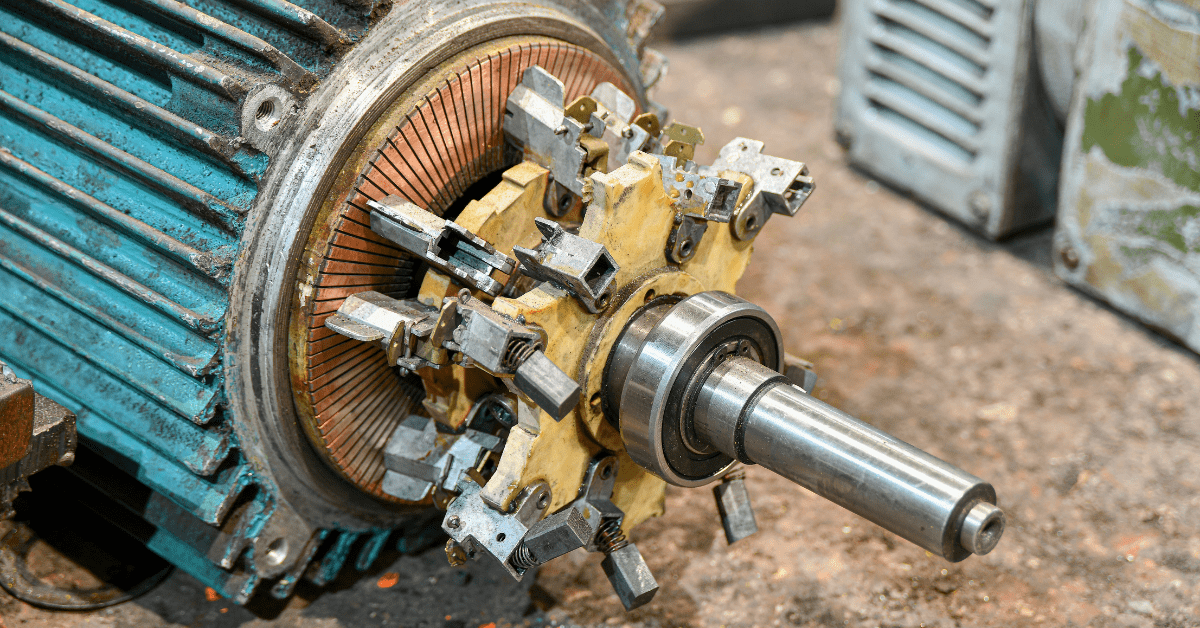
3-Phase Power Calculator to convert between kW, kVA and amps using voltage, power factor and configuration for accurate motor, cable, breaker and generator sizing.
3‑Phase Power Calculator
3-Phase Power Calculator – Formulas, Examples & Industrial Sizing Guide
In a clean Excel sheet, every motor is perfectly balanced, every breaker is sized exactly right, and the grid never dips below nominal voltage.
On a real site in USA? The grid sags, old motors pull ugly currents, someone has “temporarily” extended a panel for three years straight, and you get a call because “sir, panel trip ho gaya, production band hai.”
Accurate 3‑phase power calculations are how you stay ahead of those calls.
Get them right and you:
- Avoid nuisance overload trips and burnt contacts
- Stop oversizing gensets and UPS “just to be safe”
- Catch voltage and current imbalance before it kills bearings and windings
- Save real money on copper, switchgear, and diesel
Most of the world runs around 380–400 V, 50 Hz for industry. The US likes 480 V, 60 Hz. The math is the same, but the details and typical problems differ. I’ve designed systems in both worlds, and the plant headaches are universal: under‑estimated load, no margin for starting current, and “mystery” trips at 2 a.m.
This page walks you through the formulas, shows you real industrial examples, and gives you a practical sizing guide you can actually use on site.
Free 3 Phase Power Calculator (Concept Overview)
Use our free online 3 Phase Power Calculator below (or imagine it on your phone while you’re standing in front of a noisy MCC).
Inputs for
- Voltage (V)
- Line‑to‑line (e.g., 400 V, 415 V, 480 V)
- Current (A)
- Line current per phase (for balanced systems, just enter one value)
- Power Factor (PF, 0–1)
- Typical:
- Motors: 0.8–0.9 lagging
- Lighting: ~0.95–1.0
- UPS (input): 0.95–0.99 with PFC
- Typical:
- Configuration
- Delta (Δ)
- Wye (Y / Star) – with or without neutral
- Frequency (optional)
- 50 Hz / 60 Hz (affects motor behavior, not the basic power equations)
Outputs you’d get
Based on the inputs, the calculator gives you:
- Real / Active Power (P) in kW
- Apparent Power (S) in kVA
- Reactive Power (Q) in kvar
- Estimated phase current (if you enter kW and PF instead of amps)
- Line current (for both delta and wye cases)
- Power factor (if you enter kW and kVA instead of PF)
You’d typically use it to:
- Check if a breaker or contactor is properly sized
- Estimate generator or UPS size for a given load
- Convert amps ↔ kW / kVA quickly
- Compare measured current vs what the math says (good way to catch hidden problems)
Now let’s go under the hood so you understand what the calculator is really doing.
3-Phase Power Formulas
Three‑phase calculations look fancy until you realize most of it is just √3 and some trigonometry.
Why √3 (≈ 1.732) keeps showing up
In a balanced three‑phase system, the phases are 120° apart. If you draw the three phase voltages as vectors and look at the line‑to‑line voltages, the geometry gives you:
-
Line voltage vs phase voltage (wye):Vline = √3 × Vphase
-
Line current vs phase current (delta):Iline = √3 × Iphase
That √3 comes from the vector sum of two 120°-spaced phasors. You don’t need to derive it every day, but you should know it’s not magic.
The power triangle
For AC systems, total apparent power S (kVA) has two parts:
- P (kW) – active/real power, what actually does work
- Q (kvar) – reactive power, needed for magnetic fields in motors, transformers, etc.
They form a right triangle:
The power factor (PF) is:
where φ is the angle between voltage and current.
Inductive loads (motors, chokes, transformers) give you lagging PF. Long cable runs can add some capacitance, shifting things a bit, but most factories I see are lagging.
3‑phase power equations (line‑to‑line voltage)
For a balanced 3‑phase system:
-
Apparent powerS (kVA) = (√3 × Vline × Iline) / 1000
-
Real / active powerP (kW) = (√3 × Vline × Iline × PF) / 1000
-
Reactive powerQ (kvar) = (√3 × Vline × Iline × sin φ) / 1000
and since
sin φ = √(1 − PF2)you can compute it from PF.
-
Power factor from P and SPF = P / S
The calculator uses exactly these formulas when you punch in voltage, amps, and PF.
Line vs phase: delta and wye
You don’t need to re‑derive this every time, just remember which one multiplies by √3:
Wye (Star, Y)
-
Voltage:Vline = √3 × Vphase
-
Current:Iline = Iphase
So in wye, voltage gets the √3.
Delta (Δ)
-
Voltage:Vline = Vphase
-
Current:Iline = √3 × Iphase
In delta, current gets the √3.
Most of the time on site, you know the line voltage (400 V, 415 V, 480 V) and you measure line current with a clamp meter. Plug those straight into the main 3‑phase power formulas and you’re fine, regardless of delta or wye.
Delta vs Wye Configuration – Which to Use in Industry
I’ve seen engineers argue delta vs wye like it’s cricket teams. Let’s keep it practical.
Wye (Y / Star)
Common for:
- Distribution transformers (11 kV / 400 V Y‑connected with neutral)
- Panelboards and MCCs with neutral bars
- Mixed loads: motors + 230 V single‑phase lighting and sockets
Pros:
- Gives you a neutral conductor:
- 400 V three‑phase
- 230 V single‑phase between phase and neutral
- Easier to manage unbalanced loads (neutral carries imbalance)
- Straightforward for metering (CTs on three phases, VT line‑to‑neutral if needed)
Cons:
- Neutral under‑sized or poorly terminated? You get voltage imbalance, over‑voltage on one phase, under‑voltage on another. That kills motors slowly.
- With lots of nonlinear loads (VFDs, SMPS, servers) you can get triplen harmonics piling up in the neutral – it gets hot while your phases look “ok.”
Delta (Δ)
Common for:
- Motor windings (direct delta or inside a star‑delta starter)
- Some generator outputs
- Certain distribution schemes without neutral
Pros:
- No neutral conductor: simpler cable runs in some setups
- Handles faults in one winding better in some cases (open‑delta can limp along at reduced capacity)
- Inside star‑delta starters, you can start motors in star (lower starting current) then switch to delta for running
Cons:
- No 230 V phase‑to‑neutral tapping from that circuit
- Unbalanced phase currents can be less obvious until something overheats
- Metering and protection calculations can confuse junior engineers if they don’t respect the delta line/phase relationships
Real‑world rule of thumb:
- Distribution and mixed loads → mostly wye with neutral
- Motors and some generator connections → delta or wye without neutral depending on design
Your calculator doesn’t care which symbol is painted on the nameplate; it just wants the correct voltage and current values.
Step-by-Step Examples from the Field
Example 1: Size a 50 HP induction motor at 400 V, PF = 0.85
You’re adding a new 50 HP three‑phase induction motor on a 400 V system, and you want to:
- Estimate full-load current (FLA)
- Check breaker and cable sizing
- See what it adds to your kW and kVA demand
Step 1: Convert HP to kW
1 HP ≈ 0.746 kW (mechanical output)
Assume motor efficiency η ≈ 90% (0.9):
Step 2: Use 3‑phase power formula
Given:
- P = 41.4 kW
- Vline = 400 V
- PF = 0.85
- Balanced 3‑phase
General formula:
Substitute the values:
Denominator:
Final current:
So full‑load current is about 70 A per phase.
Step 3: Size breaker and cable
Practical moves:
- Breaker/Contactor: choose at least 80–100 A frame, set thermal around motor FLA with room for inrush and ambient temp.
- Cable: depending on installation method, ambient, and local code, you’re probably looking at something in the 25–35 mm² Cu range for this motor feeder, after accounting for derating and voltage drop.
Back in 2015 at a Faisalabad spinning mill, I saw a 75 kW motor tripping every 20 minutes because someone sized the breaker straight from FLA, forgot starting current, and then ran it in a hot, crowded MCC with no ventilation. Paper design said it should work. Panel disagreed.
Example 2: Calculate current for a 100 kVA generator at 400 V
You have a 100 kVA, 400 V, 0.8 PF generator feeding mixed industrial load. You want to know its full‑load current.
Given:
- S = 100 kVA
- Vline = 400 V
Formula:
Substitute the values:
Denominator:
Final current:
So your 100 kVA genset can supply about 144 A per phase at 400 V (assuming balanced load).
If your measured current is 180 A “just for a short time,” don’t be surprised when the generator overheats and complains.
Example 3: Backup UPS input current for 3‑phase server room
Say you’re feeding a data/server room with a 3‑phase UPS:
- UPS rating: 60 kW, PF = 0.9 (output side)
- Input PF with PFC: 0.95
- Line voltage: 400 V, 50 Hz
You want to size:
- Input breaker
- Feeder cable
- Bypass breaker
Step 1: Compute input apparent power
UPS input real power ≈ 60 kW (ignoring small efficiency losses for this rough calc).
Step 2: Input line current
Formula:
Substitute the values:
Denominator:
Final current:
So your UPS input current is around 91 A per phase at full load.
Practical notes:
- The rectifier front end draws mostly sinusoidal current in modern UPS, but check THD on the datasheet. Harmonics affect cable and breaker sizing and sometimes require derating.
- I usually give some headroom: 125 A breaker and cable sized accordingly, depending on local code and installation conditions.
Example 4: Unbalanced load scenario in a USA factory (480 V)
Now a case from a US plant with 480 V, 60 Hz.
Panel has:
- Phase A: 40 kW of motors
- Phase B: 25 kW mixed load
- Phase C: 30 kW mixed load
- Assume PF ≈ 0.85 lagging for all, three‑phase loads but not perfectly balanced by design
You want to estimate per‑phase currents for a quick sanity check.
General 3‑phase formula:
Phase A:
Denominator:
Current in Phase A:
Phase B:
Phase C:
So you’ve got roughly 56 A / 35 A / 42 A. Not a disaster, but that imbalance can:
- Increase neutral current (if there’s a wye system)
- Cause voltage imbalance at the motor terminals
- Increase losses and heating in the transformer
On one US job, the CTs showed ~20% current difference between phases on a 1000 kVA transformer. Nobody cared until bearings started failing on motors that “never overloaded.” The math matched the symptoms once we bothered to check.
Common Mistakes & Troubleshooting Tips
After 20 years, I see the same patterns repeat. Here are the classics.
-
Ignoring power factor
Assuming PF = 1.0 for an industrial motor load is a quick way to mis‑size everything.
- Real power (kW) is what management sees on the bill.
- Apparent power (kVA) is what your cables, breakers, transformer, and generator have to carry.
A 100 kW load at PF = 0.8:
S = P / PF = 100 / 0.8 = 125 kVASize the generator for 100 kVA and you’ll regret it.
Tip: If you don’t know PF, assume:
- Old motors: 0.75–0.8
- Modern motors: 0.85–0.9
- Lighting (LED): 0.9–0.95
Then verify with a power analyzer when you can. Don’t just trust the brochure.
-
Wrong voltage in the formula
People often mix:
- Line‑to‑line voltage (400 V, 415 V, 480 V)
- Line‑to‑neutral voltage (230 V, 240 V, 277 V)
For 3‑phase power, the standard formulas use line‑to‑line voltage.
If you accidentally plug 230 V instead of 400 V into:
P = √3 × V × I × PFyou under‑estimate your power badly.
-
Forgetting inrush current (starting current)
Induction motors typically pull 5–7× FLA during DOL starting. Some big ones even more.
A 70 A motor can easily draw 350–500 A for a few seconds. If your breaker, contactor, or generator isn’t sized or set with that in mind, you get:
- Starting trips
- Generator voltage dips that reset PLCs and UPS
- Brownouts on other loads
Use:
- Star‑delta starters
- Soft starters
- VFDs (which also bring harmonics, so check THD and derating)
-
Ignoring harmonics from VFDs and nonlinear loads
Modern plants are full of:
- VFDs
- UPS
- Switch‑mode power supplies
- LED drivers
All of these can generate harmonics (THD). That:
- Increases RMS current in cables
- Heats up transformers and neutral conductors
- Messes with PF readings (displacement PF vs true PF)
Practical tip:
- If THD(I) is above 20% on a feeder, don’t blindly use nameplate current. Check manufacturer derating curves for cables, transformers, and UPS.
- Consider K‑rated transformers, harmonic filters, or multi‑pulse rectifiers for big VFD banks.
-
Voltage imbalance
Even a 2–3% voltage imbalance can cause 6–10% current imbalance in motors, which leads to overheating.
Symptoms:
- One phase drawing noticeably higher current than the others
- Motor running hotter than expected
- Overload relays tripping although average current looks okay
Checks:
- Measure phase‑to‑phase voltages: Vab, Vbc, Vca
- Calculate imbalance % and compare with motor standards (NEMA/IEC guidelines).
Fixes:
- Balance loads across phases
- Check loose connections, corroded lugs
- Verify transformer taps and tap connections
Related Conversions & Advanced Topics
Amps to kW (3‑phase)
Amps to kW (3‑phase)
Given:
- Line voltage: VLL
- Line current: IL
- Power factor: PF
kW to amps (3‑phase)
Rearrange the 3‑phase kW formula to solve for line current:
Your calculator is basically juggling these two equations all day.
Motor starting vs running current
Rough rule:
- DOL start: 5–7 × FLA
- Star‑delta: 1/3 of DOL starting current (but lower starting torque too)
- VFD: can limit starting current to near FLA if programmed correctly
Always:
- Set overload relays based on motor nameplate FLA, not just cable size
- Think about voltage drop during start – long feeders and weak grids (hello WAPDA) make marginal setups fail
Generator & UPS derating (altitude, temperature, harmonics)
Real sites are hot and dusty, not 25°C labs.
- Temperature:
- Above 40°C, many generators and UPS need derating. Check the curves.
- In summer inside a poorly ventilated gen room, I’ve seen 50–55°C ambient. That’s not “normal.”
- Altitude:
- Less air density → worse cooling for generators and motors
- Above ~1000 m, you start to see derating factors from manufacturers
- Harmonics:
- Nonlinear loads can make you derate transformers and generators
- Use THD data and manufacturer charts
Quick NEC/IEC references
- IEC 60364: General LV electrical installations – used widely in Pakistan, Europe, Middle East.
- NEC Article 430: Motors, motor circuits, and controllers – if you’re in the US, live inside this article.
Whichever standard you follow, they:
- Define continuously allowable currents
- Specify conductor and breaker sizing rules
- Address protection coordination
Power factor correction capacitors
If the utility is charging for low PF, or you want to free up transformer/generator capacity:
- Install PFC capacitor banks
- Aim for PF around 0.95 lagging; don’t over‑correct into leading PF, especially on lightly loaded generators
Cap banks:
- Reduce kvar demand
- Lower kVA, thus reducing currents and I²R losses
- Help with voltage regulation
But:
- Can resonate with system inductance at certain harmonic frequencies
- Can make harmonics worse without filters
Other real‑world factors
- Voltage drop:
- Long motor feeders → check %VD at FLA and during start
- Usually keep VD under 3–5% for motors
- Skin effect:
- At 50/60 Hz, it’s modest, but for large conductors (big busbars) and high currents, it starts to matter
- CT ratio for metering:
- Size CTs based on maximum expected kVA, not just nice round numbers
- Leave margin for future expansion
- For a 1000 A feeder, a 1200/5 CT isn’t a bad idea if you know someone will “just add a few more machines” later
Why Use This Calculator Over Others
Most online 3‑phase calculators are written like textbooks. Correct, but clueless about what happens in a real plant.
This approach is different:
- Field‑driven: Formulas tied directly to motors, MCCs, and generators you actually work with
- Regional voltages: Talks in 400 V/50 Hz and 480 V/60 Hz, not just theoretical 415 V systems from an old CE book
- Industrial focus: Includes inrush, harmonics, derating, not just neat little balanced loads
- Caution baked in: Reminds you to verify PF, measure actual loads, and respect protection settings
Use the calculator as your quick check. Use your brain and your meter for the final decision.
Watts to Volts Calculator three‑phase electric power and phasor relationshipsFAQ – 3-Phase Power & Industrial Sizing
FAQ for 3 Phase Power Calculator
How do you calculate 3-phase power?
For a balanced 3‑phase system, using line‑to‑line voltage (VLL) and line current (IL):
Real power (kW):
Apparent power (kVA):
Reactive power (kvar):
You either:
- Measure V, I, and PF with a power analyzer, or
- Use known load kW and PF to back‑calculate current.
What is the formula for 3-phase kW?
For a balanced 3‑phase system:
Example at 400 V, PF 0.85, 70 A:
How do you convert kW to amps in 3-phase?
Rearrange the 3‑phase kW formula to solve for current:
You need:
- kW (real power)
- Line‑to‑line voltage VLL
- Power factor (PF)
Without PF, any answer is just a guess.
Why is √3 used in three-phase power?
In a balanced 3‑phase system, the line‑to‑line voltages are √3 times the line‑to‑neutral (phase) voltages. This comes from vector math of three sine waves 120° apart.
For a wye system:
For a delta system:
When you derive total 3‑phase power from phase values, the √3 factor naturally appears. The standard 3‑phase power formulas simply include that relationship.
Delta vs Wye: What’s the difference and where are they used?
Delta (Δ):
- Line voltage = phase voltage
- Line current = √3 × phase current
- Common for motor windings and some generator connections
- No neutral, so no 230 V phase‑to‑neutral available from that circuit
Wye (Y / Star):
- Line voltage = √3 × phase voltage
- Line current = phase current
- Common for distribution with neutral (400/230 V, 480/277 V)
- Lets you serve both 3‑phase and single‑phase loads
Use wye with neutral for mixed loads and general distribution. Use delta or wye without neutral mainly for motors and some dedicated feeders.
How many amps are there in 3-phase power?
It depends on kW/kVA, voltage, and PF. There’s no single “3‑phase amps” number.
To find amps given kVA, use:
Example: How many amps is 50 kVA at 400 V?
If you only know kW, you also need PF to convert to amps accurately.
