

What’s really going on with EV charging stations in the U.S.?
Why “power limited” appears on many chargers — and how Dynamic Load Management (DLM), OCPP, proper metering, ROI tools and cybersecurity keep chargers profitable.
If you’ve ever pulled into a busy EV charging lot and seen that half of the chargers said “power limited”, you already know what happened: the grid wasn’t designed to power a large number of fast chargers simultaneously. Dynamic Load Management (DLM) is the answer — the unsung hero of modern EV charging infrastructure.
I’ve worked with electrical systems for a long time, from big factories to Tesla’s first Superchargers. Smart load control isn’t just a “nice to have” — it’s the difference between paying a fair monthly bill and getting hit with demand charges that can be as high as a mortgage.
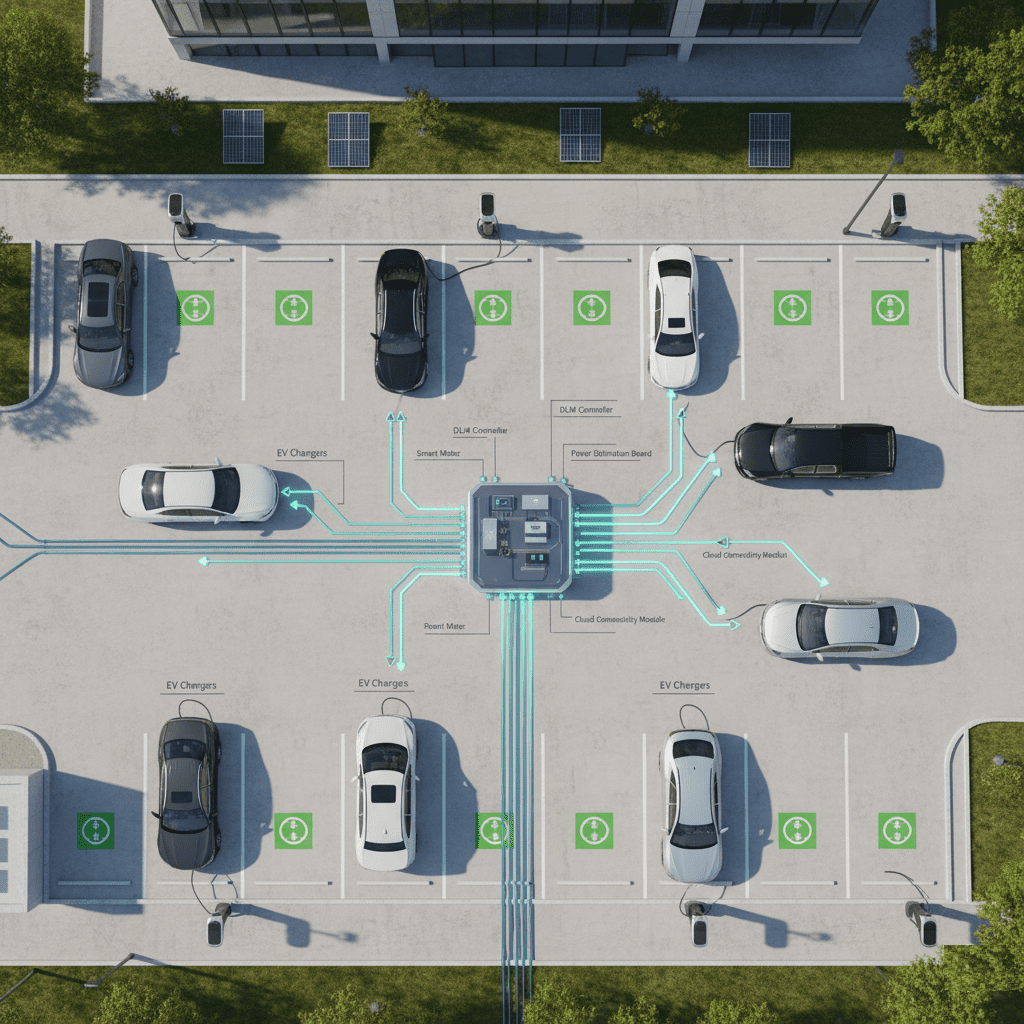
Getting to know Dynamic Load Management (DLM)
DLM decides the amount of electricity to allocate to each charger at any given time. Rather than letting every plug fight for the most amps, it spreads power across them in a smart way.
| Type | How It Works | A Typical Use Case |
|---|---|---|
| Managing Static Load | Chargers have a fixed limit regardless of real-time demand | Small homes or light commercial setups |
| Managing Dynamic Load | Real-time monitoring changes output based on demand, building load and grid limits | Public charging stations, workplaces, commercial fleets |
Dynamic management prevents total site demand from spiking, which avoids high utility demand charges.
DLM Strategies That Work
- Equal distribution — everyone gets the same share.
- Priority rules — give fleets or urgent users priority.
- Adaptive allocation — software learns usage patterns and shifts power automatically.
| Strategy | Best For | Drawback |
|---|---|---|
| Equal | Homes & small businesses | Charge times increase under heavy demand |
| Priority | Fleet & depot operations | May frustrate casual users |
| Adaptive | Mixed-use networks | Needs good software & monitoring |
How OCPP Integration Brings It All Together
Hardware without software is just metal. OCPP (Open Charge Point Protocol) is the language chargers use to talk to central management systems (CSMS). OCPP messages manage transactions, permissions, error alerts and load commands.
The Demand-Charge Problem (Simple Example)
Many U.S. commercial tariffs include a demand charge measured in kW. It’s based on the highest instantaneous usage during the billing cycle — not total energy consumed.
| Utility Tariff Example | Value |
|---|---|
| Electricity rate (per kWh) | $0.14 |
| Demand charge (per kW) | $15 |
| Max site load without DLM | 220 kW |
| With Dynamic Load Limit | 150 kW |
Real-Time Data, Gateways, and Metering
DLM requires accurate measurement. Smart meters or CTs track each charger and total facility load. A gateway aggregates and forwards this to the CSMS via OCPP. Sites with 10+ chargers often benefit from higher-grade metering to avoid misallocation that can cost thousands.
Vendors offering UL-listed metering gateways compatible with OCPP include major manufacturers and reputable OEMs — replace names with local vendor links when publishing.
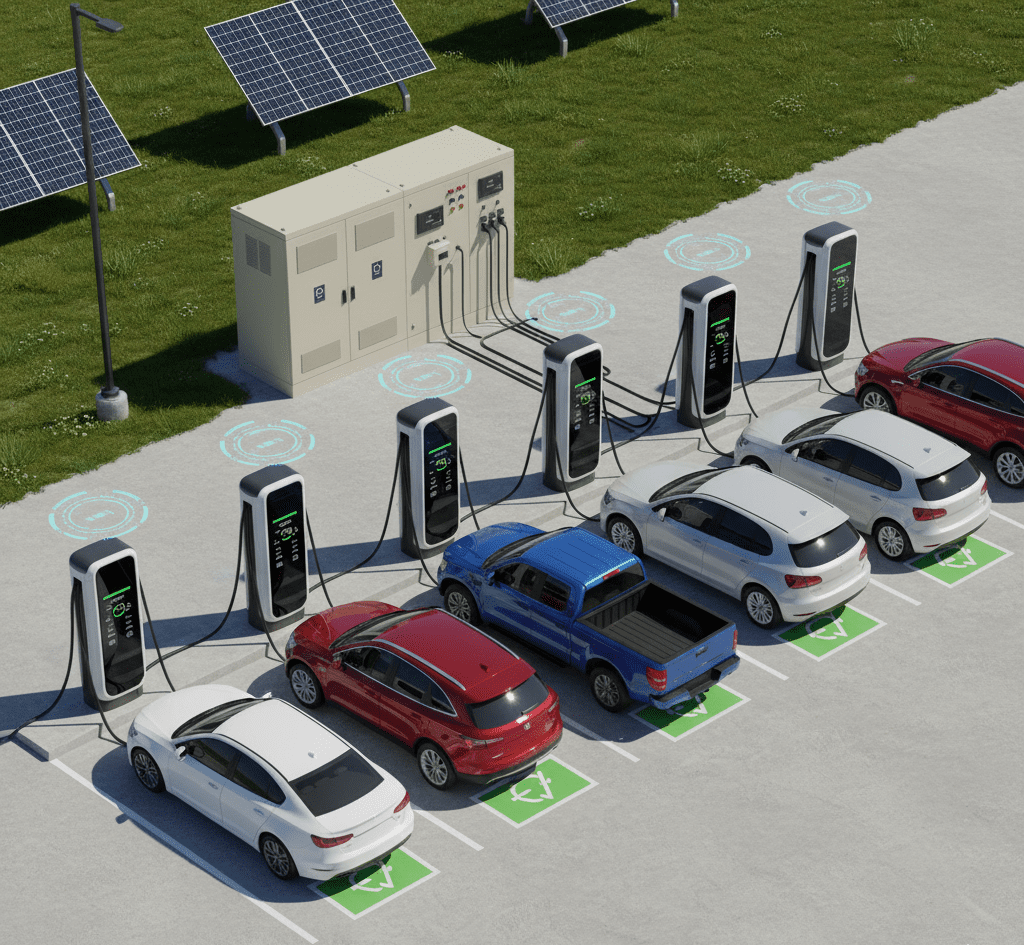
Interactive ROI Calculator for EV Charging Projects
Use our interactive ROI calculator to quickly estimate your potential revenue, expenses, and payback period. Enter the specifics of your project, such as charger investment and daily energy sales, to observe the effects of demand savings, energy expenses, and dynamic load management (DLM) on your profitability. Ideal for commercial operators, fleet managers, and site owners who want to organize effective and affordable EV charging stations.
Interactive ROI Calculator for EV Charging Projects
Use our interactive ROI calculator to quickly estimate your potential revenue, expenses, and payback period. Enter the specifics of your project, such as charger investment and daily energy sales, to observe the effects of demand savings, energy expenses, and dynamic load management (DLM) on your profitability. Ideal for commercial operators, fleet managers, and site owners who want to organize effective and affordable EV charging stations.
Examples from real life
- Los Angeles depot: DLM for 40 trucks cut monthly energy costs by 38%.
- Austin tech office: OCPP-enabled chargers + DLM avoided a building service upgrade.
- New York mixed-use garage: rooftop solar + DLM improved ROI by 1.5× by avoiding evening peaks.
- Seattle University: load control tied to access cards; IT and facilities both benefited.
- Denver Public EV Hub: added security to gateway interfaces and prevented a ransomware attempt.
Cybersecurity & fail-safes
Best practices:
- Segregate charger networks from office Wi-Fi.
- Use encrypted tunnels (TLS/VPN) for OCPP communications.
- Keep firmware updated and provide fallback static limits for offline operation.
- Monitor anomalies and set automated alerts for suspicious behavior.
The Key to Ongoing ROI Is Constant Monitoring
DLM isn’t “set and forget.” Check your CSMS dashboards regularly for site load, session efficiency, demand trends, and equipment availability so you can act before bills spike.
Wrapping It Up — Why It Matters
EV infrastructure is growing quickly, but the grid wasn’t built for many simultaneous fast chargers. DLM lets you scale without huge costs. For multi-station projects, include DLM, OCPP and accurate metering from day one to protect margins and allow profitable growth.
Frequently Asked Questions (Expanded to 20)
- What does Dynamic Load Management (DLM) mean?
It automatically distributes available power among multiple EV chargers to prevent overloads. - Why do chargers show “Power Limited”?
The site load exceeded its maximum limit; DLM temporarily reduces power to balance demand. - How much does DLM reduce monthly demand charges?
Typically 20–40% savings depending on peak load control and utility tariff. - What is OCPP?
The Open Charge Point Protocol — a universal communication standard between EV chargers and central management software. - Which OCPP version is common in the U.S.?
Version 1.6J is widespread; 2.0.1 is gaining adoption for advanced energy management and security. - Can old chargers be upgraded to support DLM?
Only if they have firmware supporting OCPP smart charging profiles. - What’s a demand charge?
A utility fee based on your site’s highest instantaneous power draw (kW) during a billing cycle. - How can DLM help with demand charges?
It caps total site power draw by shifting charging loads intelligently. - What ROI do most U.S. commercial charging projects see?
2–4 years is typical with consistent usage and incentive programs. - Are there U.S. tax credits or rebates for EV charging?
Yes. Federal IRS §30C credit and many state-level programs (e.g., California, New York) cover 30–70% of costs. - Can I combine solar or batteries with DLM?
Absolutely — hybrid systems lower grid demand and speed ROI. - Do I need Internet for DLM?
Yes, for real-time communication. Offline fallback modes can still enforce static load limits. - How secure is OCPP communication?
With TLS encryption and firewalled gateways, it meets most cybersecurity requirements. - Can DLM support both AC and DC fast chargers?
Yes — software can manage both types simultaneously with proper metering. - How do I choose the best DLM software?
Look for OCPP compliance, remote diagnostics, analytics, and U.S. utility tariff integration. - What hardware is needed?
Smart meters or CTs, a site energy gateway, and chargers supporting OCPP load control. - What’s a realistic utilization rate?
Public DC stations in cities average 25–40% utilization (6–10 hours/day of active charging). - Can homeowners use DLM?
Yes, many Level-2 smart chargers balance household load automatically. - How often should ROI be reviewed?
Every quarter — to include tariff changes, incentive updates, and charger usage data. - What future upgrades can improve ROI?
Adding solar canopy, storage, or dynamic pricing integration with OCPP 2.0.1 backends.
