


Introduction
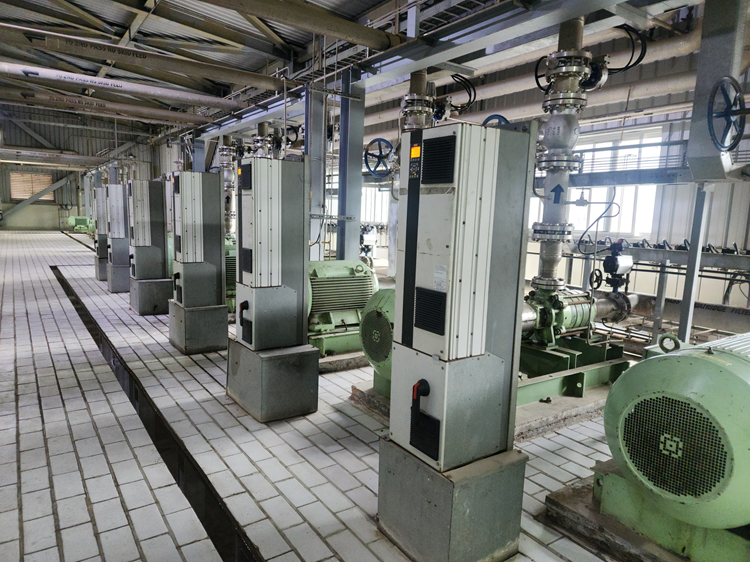
A Variable Frequency Drive is being used in industry to control the speed of an electric motor by adjusting the frequency and voltage.
It helps motors operate at the right speed to meet the process requirements, which reduces energy waste and extends the motor’s life. Motor speed controller are widely used in many industries, including power plants, chemical processing plants, food production plants, HVAC systems, water treatment, and automotive production.
Why do these industries depend on VFDs to control motor speed, because it improves efficiency, and reduces energy consumption. In short, VFD actually adjust the motor speed to save energy consumption to save electricity bills.

Here you can go through How Variable Frequency Drive (VFD) Works in industries with practical examples & Hardware details and Fault Rectification in easy steps.
What is a VFD?
A Variable Frequency Drive (VFD) controls the motor speed by changing the power it receives. It first converts the 3-phase AC supply into DC supply. Then, it converts the DC back to AC with the adjustable frequency using IGBTs . This allows the Variable Frequency Drive (VFD) to control how fast the motor rotates (RPM). Here’s how it works:
1. Rectifier:
The Variable Frequency Drive (VFD) starts with the rectifier, which changes 3-phase alternating current (AC) into direct current (DC). A typical rectifier has 6 diodes. This is very important to understand that the diodes only allow electricity to flow in one direction only, like a one way road. In a 3-phase AC system, three separate currents flow at different times. The rectifier opens 2 diodes at a time, letting only one current flow. This process turns the AC into ripple DC, which still has small fluctuations.
- L1 > D1 and D4
- L2 > D2 and D3
- L3 > D5 and D6
- L1 > D2 and D6
- L2 > D1 and D5
- L3 > D4 and D3

2. Filtration:
After the current is rectified, it flows through the filter/DC bus. The purpose of this stage is to smooth out the ripples in the DC power. This filtration is processed by using capacitors and resistors as shown in the image.
You know the capacitor serves as energy storage devices, they temporarily hold the charge and release the charge as needed. Just like In the power supply circuits, when the DC voltage rises above a threshold level, the capacitors store the excess energy in it. When the voltage drops (during the ripple between pulses), the capacitors discharge the voltages to maintain a more constant voltage.
For the resistors in the circuits which are often placed in series with the capacitors, which help to balance the capacitor charge and discharge rates, preventing uneven voltage across the capacitors. This also helps to reduce the ripple in the DC output that results in a smoother and more stable DC voltage. This smooth DC voltage is very important for powering the sensitive electronic equipment & the control circuits.
This DC Bus also reduce voltage fluctuations and provides a cleaner, more consistent power source.
3. Inverter:
In the inverter section; the DC power is converted to AC power through the use of an inverter. The inverter consist of IGBTs (Insulated Gate Bipolar Transistors). IGBTs function as switch that can rapidly turn ON and OFF, sometimes up to thousands of times a second. The switches control the flow of current among the phases as illustrated below.
As a result, the produced AC waveform is square-shaped as opposed to the traditional waveform. In this stage, pulse-width modulation (PWM) is used to smoothen the AC waveform further.
How Variable Frequency Drive Control Motor Speed
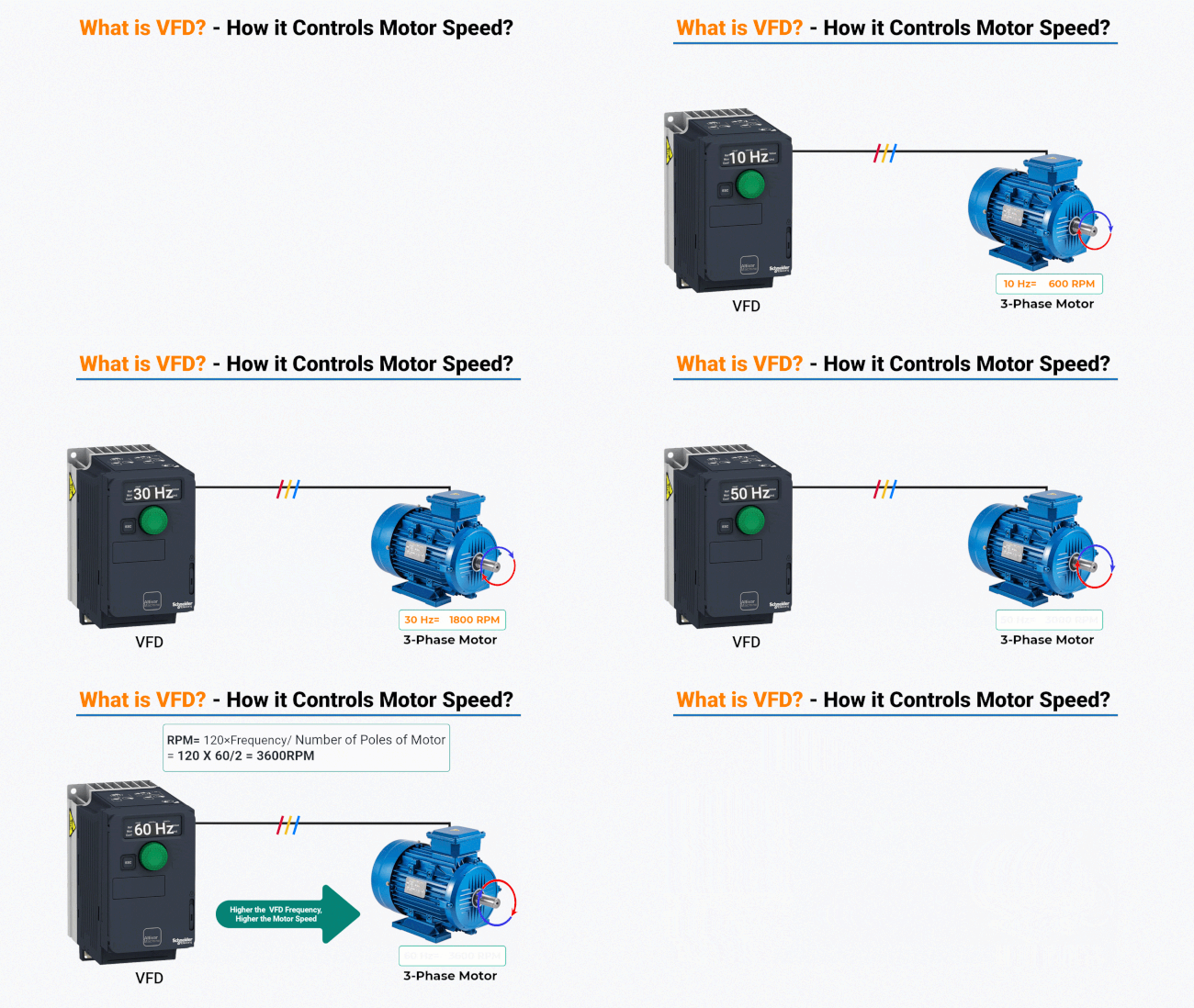
In the case of a motor, we can see that the power supplied to the motor is in the form of AC, therefore the motor will run at a speed determined by the frequency of the AC supply to the motor.
As you can seen in the above video, higher the frequency results in higher the motor speeds. It is capable of controlling the IGBTs to switch to higher and lower frequencies, thus by controlling the motor speed.
Conclusion:
Basically, a motor speed controller manages the speed and functionality of electric motors. The Variable Frequency Drive (VFD) get this by controlling the supply voltage, first changing AC to DC, then filtering it, and finally converting it back to an adjustable AC supply at the VFD output. This functionality enabling industries to effectively control motor speeds in process applications, enhancing energy efficiency and performance.
How a Variable Frequency Drive (VFD) Works Practically1. How does a VFD work?
So basically a VFD has three main stages inside it. First you have the rectifier section which is just a bridge of diodes that takes your incoming AC and converts it to pulsating DC. That pulsating DC then passes into the DC bus where big electrolytic capacitors smooth it out into a steady DC voltage. Think of it like a reservoir holding energy. Now the interesting part is the inverter section where six IGBT transistors switch on and off thousands of times per second to reconstruct an AC waveform from that stored DC. The way the drive controls speed is through PWM which basically means it varies the width of voltage pulses to mimic a sine wave at whatever frequency you want. Wider pulses give you higher effective voltage and narrower pulses give you lower voltage. So when you dial down the speed on a VFD you are really just telling it to output a lower frequency and the voltage follows proportionally to maintain proper flux in the motor
2. How do you size a VFD for a motor?
Honestly this trips up a lot of people because they just match horsepower and call it a day. What you really need to look at is the full load amperage on the motor nameplate. Say your motor is rated 25 amps FLA then your drive better be able to deliver at least 25 amps continuously without breaking a sweat. Now the next question you need to ask yourself is what kind of load am I driving. Fans and pumps follow the affinity laws so the torque requirement drops off significantly at lower speeds. For those applications a Variable Torque rated drive works fine because you rarely see overload conditions. But something like a conveyor belt or a grinding mill has constant torque demand regardless of speed and can see heavy startup loads. For that you need a Constant Torque rated drive that can push 150 percent current for 60 seconds without faulting. I have seen guys put a VT rated drive on a loaded conveyor and wonder why it keeps tripping on overcurrent within the first ten seconds.
3. Can I run a VFD on single-phase power?
I get asked this all the time especially from guys running equipment in shops or rural locations where three phase is not available. The short answer is yes most small to mid size VFDs will accept single phase input and give you three phase output which is honestly one of the coolest things about a drive. But you cannot just take a three phase rated drive and slap single phase on it without consequences. When you feed single phase into a six diode bridge only two diodes carry the full load which means your DC bus ripple goes way up and the capacitors work much harder and run hotter. Most manufacturers say you need to derate by about half or bump up one or two sizes. Some drive families are specifically built for single phase input and those are the ones you want to use if that is your situation. Always read the installation manual because if the manufacturer does not list single phase as an approved input configuration you are on your own if something fails.
4. What are the main causes of VFD faults and how do you troubleshoot them?
In my experience the three faults you see over and over are overvoltage, overcurrent, and ground fault. Overvoltage almost always shows up when you try to stop the motor too fast. The motor keeps spinning because of inertia and it becomes a generator feeding energy back into the DC bus and the bus voltage shoots up past the trip point. Easiest fix is to slow down your decel ramp. If the process does not allow that then you need a braking resistor to dissipate that regenerated energy as heat. Overcurrent faults mean the drive is seeing more amps than it is rated for. Could be a mechanical jam, a bad bearing, a shorted winding, or even just an undersized drive for the application. Pull the motor leads off the drive output terminals and megger each phase to phase and phase to ground. If the motor checks out then look at the mechanical load. Ground faults tell you current is finding a path to earth that it should not be on. Nine times out of ten it is damaged cable insulation somewhere in the run or moisture inside the motor junction box. Disconnect everything and megger each section individually until you find the weak spot.
5. Do VFDs cause harmonics and how can you reduce them?
Yes they do and there is no getting around it because of how the rectifier works. A diode bridge does not draw current smoothly from the supply. It only pulls current during the peaks of the voltage waveform in short sharp bursts. Those bursts contain harmonic frequencies mainly the 5th and 7th which flow back into the electrical system and distort the voltage waveform for other equipment sharing that supply. If you have a bunch of VFDs on a weak supply you can start seeing transformers overheating, capacitor banks blowing fuses, and sensitive electronics acting strange. The first line of defense that I always recommend is a simple AC line reactor on the input of each drive. A 3 percent or 5 percent reactor smooths out the current draw and knocks the harmonic distortion down considerably for very little money. If your facility has strict harmonic requirements under IEEE 519 then you start looking at 12 pulse or 18 pulse drive configurations, passive tuned filters, or active harmonic filters that inject corrective current in real time. Each step up costs more but cleans things up further.
6. Can a VFD damage a motor or shorten its life?
It absolutely can and I have replaced plenty of motors that died early because nobody considered the effects of running on a drive. The IGBTs inside a VFD switch on and off incredibly fast and every switching event sends a voltage spike down the cable to the motor. These spikes have very steep rise times and when they hit the first few turns of the motor winding the voltage concentrates right there instead of distributing evenly across all the turns. Over months or years that repeated stress breaks down the insulation and you get a turn to turn short. The other killer is bearing currents. PWM switching creates a common mode voltage on the motor shaft and that voltage builds up until it finds a path to discharge through the bearing grease. Each little discharge is like a tiny arc weld inside the bearing and over time you get a washboard pattern on the bearing races called fluting. The motor gets noisy and eventually the bearing seizes. You prevent the insulation damage by using inverter rated motors or adding output filters to clean up the waveform. For bearing protection you install shaft grounding brushes or rings and in some cases use ceramic or insulated bearings. These are not expensive fixes but people skip them and pay for it later.
7. What is the difference between a VFD and a soft starter?
People confuse these two all the time but they really serve different purposes. A soft starter limits the voltage applied to the motor during startup so instead of getting hit with full voltage across the line the motor sees a gradual ramp up. This reduces the inrush current and takes the mechanical shock out of starting which is great for things like large compressors or pumps connected to long pipe runs where water hammer is a concern. But once the motor gets up to full speed the soft starter steps out of the circuit and the motor runs directly on line power. There is no speed control at all during normal running. A VFD on the other hand controls the motor from zero speed all the way up to full speed and beyond if you want. It gives you precise process control and real energy savings especially on centrifugal loads where even a small speed reduction means a big drop in power consumption. The tradeoff is cost because a VFD is significantly more expensive than a soft starter. So if all you need is a smooth start and your motor runs at one speed all day then a soft starter makes perfect sense and saves you money. But the moment you need to vary the speed for any reason the VFD is the way to go.
8. How far can the motor be from the VFD?
This is something you have to think about during the design phase not after the cable is already pulled. Every VFD manufacturer publishes a maximum cable length and for most standard drives it falls somewhere between 50 and 100 meters depending on the switching frequency and drive model. The reason distance matters is because of how PWM pulses behave on a cable. That cable has capacitance and inductance and when a fast rising voltage pulse hits the motor terminals and sees the impedance mismatch it reflects back. That reflected wave adds to the incoming wave and you can end up with voltage peaks at the motor terminals that are double what the drive is putting out. On a 480 volt system that means over 1200 volts hitting the motor windings which will eat through standard insulation pretty quickly. Long cables also draw more capacitive charging current on every switching cycle which robs useful current capacity from the drive. If your layout requires a long run you need to install an output reactor to knock down the peak voltage or a full sine wave filter for runs beyond 300 meters. Also size the cable generously because voltage drop over distance is real and your motor will underperform if it is not getting the voltage it needs at the terminals.
9. What type of motor is compatible with a VFD?
Pretty much any three phase squirrel cage induction motor will physically run on a VFD and in many retrofit situations that is exactly what happens. You connect the drive to an existing standard motor and it works. But working and lasting are two different things. A standard motor was designed to run on clean utility power at 60 Hz. The insulation system, the cooling design, and the bearings were all engineered with that assumption. When you put a VFD in front of it you are now subjecting that motor to high frequency voltage spikes, additional heating from harmonic currents in the windings and rotor, and shaft voltages it was never meant to handle. Inverter duty motors built to NEMA MG1 Part 31 address all of those issues. They have reinforced insulation systems that can handle peak voltages up to 1600 volts on 460 volt rated machines. They often come with independent cooling fans that maintain airflow at low speeds and some have provisions for shaft grounding built right in. For any new project where a VFD is in the picture I always write inverter duty into the motor spec. The price difference is not that significant when you compare it to the cost of pulling a failed motor out of service and replacing it after two years.
10. How do you reduce EMI and electrical noise from a VFD?
VFDs are noisy devices electrically speaking. Those fast switching IGBTs generate high frequency noise that can radiate from the motor cables and conduct back through the power supply affecting everything from PLC analog inputs to communication networks. The most important thing you can do is use shielded motor cable and terminate that shield properly. I mean a full 360 degree connection to the ground bar using a metal cable gland or clamp not a twisted pigtail hanging off a screw terminal. That pigtail does almost nothing at high frequencies. Terminate the shield at the drive end and at the motor end both. On the supply side of the drive an RFI filter installed right at the input terminals keeps conducted emissions from getting back onto the mains. Keep your drive power cables as far away from signal and communication cables as physically possible. I follow the 300 millimeter minimum separation rule and where crossings are unavoidable make them at 90 degrees to minimize coupling. Good grounding is absolutely critical. Use short wide ground conductors because at high frequencies a long skinny wire has too much impedance to be effective. If you still have noise creeping into sensitive circuits try putting ferrite chokes around those signal cables close to the source of the problem. Between proper shielding, filtering, separation, and grounding you can run VFDs right next to sensitive instrumentation without issues if you do it right.
