

How businesses are using data-driven power systems to cut costs and carbon: EV Fleet Electrification Meets the Smart Grid.
How U.S. companies save money and cut emissions using data‑driven smart grids and EV fleet electrification for cleaner and cheaper energy.
The New Pulse of Corporate Mobility: An Introduction
Let’s be honest: every major U.S. company is talking about electric cars right now. You can’t park at a hotel, grocery store, or even a construction site without seeing a charger or a sleek electric truck humming quietly nearby. But it’s not just the switch to electric that is happening quickly; it’s also how those cars connect to smarter power systems.
For years, I’ve worked with fleet managers, and they always ask the same question: “How can we make this switch without going over budget or breaking the grid?” That’s where smart grids and power tools that use data come in. They don’t just keep EVs charged; they also make sure the energy used is cheaper, cleaner, and better managed.
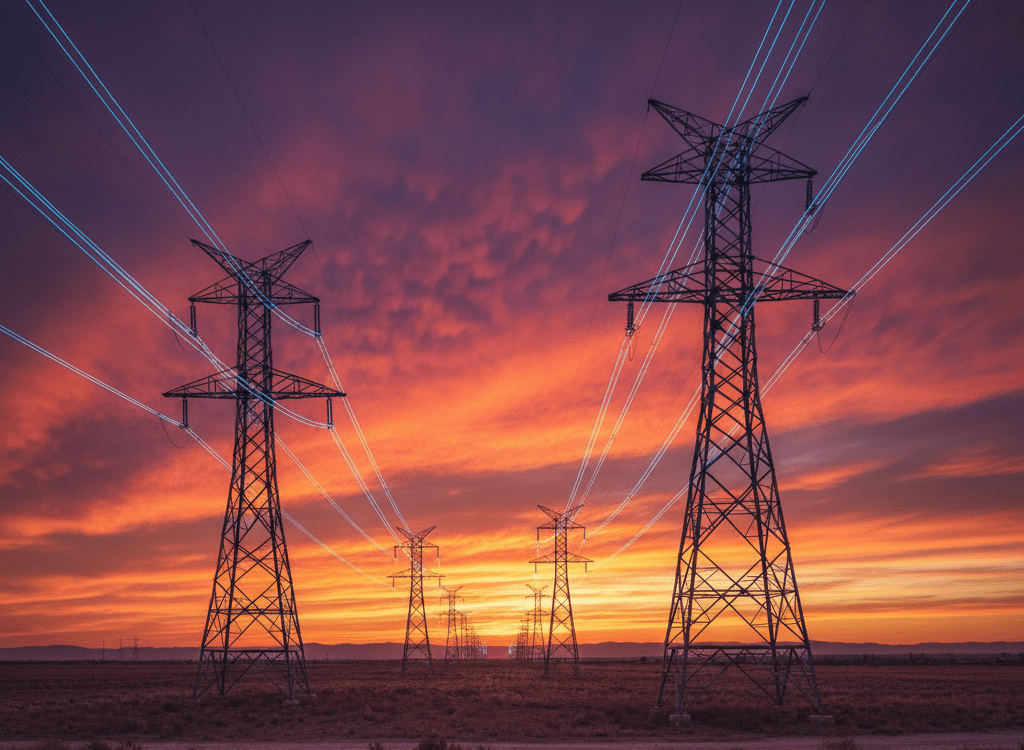
What does it mean to electrify an EV fleet?
When you electrify an EV fleet, you replace gas or diesel vehicles with electric ones and build the whole system that keeps them running, including chargers, maintenance software, and charging schedules. Most fleets don’t do this in one night. They start by choosing a few routes that are good for electric vehicles, like short city routes, light-duty vans, or delivery cars.
Amazon and FedEx, two big companies, have already put thousands of electric vans on the roads in U.S. cities. Fleet software that connects directly to power suppliers keeps track of performance, charging times, and battery ageing.
That information is worth a lot. It tells managers when, where, and how to change energy use so they don’t have to pay high rates during peak hours.
The Link to the Smart Grid
The smart grid is like the internet for electricity. It keeps an eye on and controls the flow of energy across the network using sensors, meters, and analytics.
For instance, when hundreds of electric vehicles plug in after work, old-style grids would see a huge increase in demand. But a smart grid can automatically balance that load. It uses energy forecasting tools to guess how much energy will be used and grid analytics to make changes in real time.
- Keeps local substations from getting too much stress from fleets.
- Lessens the chance of a blackout.
- Allows fleets to use renewable energy when it costs the least.
Table 1: Smart Grid vs. Regular Grid
| Part | Grid in the Old Way | Smart Grid |
|---|---|---|
| Watching | Checks by hand | Sensors that work in real time |
| Collecting data | Very little | Automatic and predictive |
| Load balancing | Set schedules | Forecasting that changes |
| Managing the cost of energy | No optimisation | Based on AI |
| Integration of renewable energy | Limited | Works perfectly with renewables |
Data-Driven Saving Energy
You’d be surprised at how much a fleet saves by not having to guess. For example, a logistics company in Texas has 200 electric vehicles. They could charge all the vans at 5 p.m., which is when energy prices are highest, if they didn’t have energy scheduling. The same fleet can save 25% or more on its monthly electricity bills by moving 60% of its charging to after midnight.
Load forecasting and predictive maintenance help save money. The grid knows when to send cheaper electricity, and analytics let managers know when chargers are about to break or vehicle batteries are about to die.
In 2023, the City of Seattle’s electric bus fleet added AI-based load forecasting software. The city said that it saved about $1.6 million USD each year on grid management costs.
Fleet + Grid Synergy in the Real World
Let’s look at some real-life examples that show the idea works:
- Amazon Delivery Network (U.S.) – More than 10,000 Rivian vans are now connected to the regional grid system through cloud dashboards. Amazon cut its energy costs per mile by about 30% by using predictive charging.
- UPS California Hub – Set up bi-directional (V2G) charging. When not in use, vans send power back to the grid, which earns them credits.
- DHL North America – Uses IoT energy sensors at 25 locations. They said they cut carbon emissions by the same amount as taking 6,000 gas-powered cars off the road each year.
- PepsiCo’s Texas plant – Has a fleet of electric vehicles that work with solar microgrids on-site to lower power bills and reliance on the grid.
- FedEx Memphis Hub – Combines energy forecasting with local renewable sourcing to make the grid more reliable.
Table 2: An Example of How to Cut Costs and Carbon
| Business | Size of the fleet | Plan for Energy | Yearly Savings (USD) | Less CO₂ |
|---|---|---|---|---|
| Amazon | 10,000 vans | Scheduling wisely | 5,000,000 | 25,000 tons |
| UPS | 2,500 vans | V2G systems | 1,200,000 | 6,800 tons |
| DHL | 3,000 trucks | IoT sensors | 800,000 | 5,200 tons |
| FedEx | 1,200 trucks | Forecasting and renewable energy | 700,000 | 3,500 tons |
Tech Tools Changing the Game
Here’s a look at what’s going on behind the scenes:
- Cloud SCADA systems keep an eye on how well the grid is working and send data to operations dashboards.
- Sensors in chargers and cars that are connected to the Internet of Things (IoT) collect real-time energy data.
- AI energy software predicts how much power will be needed.
- Tools for monitoring transformers stop overloads before they happen.
- Data acquisition systems combine data from meters and fleets to make smart predictions.
Integration is the magic here. These systems can talk to each other, which is how big fleets get more out of every kilowatt hour.
Problems and Help from the Government
It’s not easy to electrify fleets, to be fair. Let’s talk about the main problems:
- Cost up front: Electric trucks can cost twice as much as diesel trucks right now.
- Delays in installing charging stations: It can take months to get a permit.
- Grid reliability: Some older grids have trouble with spikes.
- Data privacy: Businesses need safe networks for fleet and grid data.
The good news is? The federal government in the U.S. knows this. The Inflation Reduction Act and the EV Infrastructure Investment Fund are two programs that give tax credits of up to 30% of the cost of installing charging systems. Several states add extra incentives on top of that.
How to Get a Business Started
- Begin with small steps. First, electrify the routes that make sense for EVs.
- Choose smart chargers. Choose models that can connect to grid software.
- Keep track of data. Use energy management software to make schedules and reports.
- Work with the utilities in your area. They often give discounts based on when you use them.
- Plan your space. Layouts for cables and parking are needed at EV hubs.
And really, believe your data more than your gut; the numbers don’t lie very often.
Example: Quick Charge Cost Calculator (Idea)
| Metric | Formula | Sample |
|---|---|---|
| Average Energy Cost (USD) | total kWh times average rate | 104 USD = 800 kWh × 0.13 |
| Peak Savings (USD) | base rate times the percentage of the reduction | 104 × 0.25 = 26 USD |
| Monthly Fleet Saving | per-charge × total vehicles | 26 × 200 = 5,200 USD each month |
Use this simple spreadsheet template to see how much money you could save for your own fleet.
Examples of Supportive Projects in the U.S.
- Funding more than 170 EV charging stations through the California Energy Commission.
- New York Power Authority: Connecting microgrids to transit fleets.
- Florida DOT is testing solar-powered chargers on highways.
- Texas SmartGrid Innovation Lab worked with private fleets to make adaptive load control.
Conclusion: The Future of Business Mobility Will Be Electrified
Every big change looks bad at first, but this one is going in the right direction. Fleet electrification isn’t just about changing engines; it’s also about using energy more wisely. Companies that connect to the smart grid now will save money on fuel, be more reliable, and have a better reputation in the long run.
The truth is? For every business, electricity and data are becoming the best ways to stay green and make money.
Frequently Asked Questions (FAQ)
Q1: What does it mean to electrify an EV fleet?
Ans: It’s the process of switching out gas or diesel cars in a business fleet for electric ones and setting up the charging network to support them.
Q2: What does a smart grid do for EV fleets?
Ans: It automatically balances the supply and demand for energy, gives you cheaper power during off-peak hours, and stops overloads.
Q3: Do small businesses also have to go electric?
Ans: Yes. A lot of small delivery and service companies in the U.S. start with a few vans to see how much they can charge and how well they can keep to their schedules.
Q4: How much does each EV fleet save on average each year?
Ans: The total cost of energy can be anywhere from 15% to 30%, depending on the size and region.
Q5: What does V2G stand for?
Ans: Vehicle-to-Grid lets parked electric vehicles send power back to the grid in exchange for credits or lower rates.
Q6: Do EV fleet chargers cost a lot?
Ans: Commercial chargers start at 3,000–7,000 USD for each unit, plus the cost of installation.
Q7: What does grid analytics mean in simple terms?
Ans: It’s using software to look at how electricity is used and guess how much will be needed in the future.
Q8: Where do IoT sensors fit in?
Ans: They get real-time information from batteries, chargers, and power lines.
Q9: Which states have the best incentives for electric vehicles?
Answer: California, New York, and Colorado are currently in the lead with tax credits and grants.
Q10: Is it possible for a business to make money by going electric?
Answer: Yes. Most fleets get their money back in 3 to 5 years, depending on how much fuel they save.
Q11: Why do businesses hold back?
Ans: The costs of getting started and not knowing how to charge for access.
Q12: How dependable are smart grids in the United States?
Yes, very. Since 2021, most major utilities have started using smart load-balancing systems.
Q13: What kinds of data tools do fleet managers use?
Ans: Software for managing energy, like Siemens GridEdge or Eaton Brightlayer.
Q14: Is it possible for renewable energy to work with fleet systems?
Yes, for sure. The costs and carbon emissions go down at the same time when you use solar and wind energy.
Q15: How do you figure out how much it costs to charge?
Answer: The cost per charge is the average kWh times the local rate.
Q16: Do federal incentives still work?
Answer: Yes. The Inflation Reduction Act of 2022 gave more time for people to use clean energy credits.
Q17: Which EV van in the U.S. uses the least amount of energy?
Ans: The Ford E-Transit and the Mercedes eSprinter are two examples of business fleets that lead the way.
Q18: How can data keep things from going down?
Ans: Predictive maintenance tells managers when parts are about to break.
Q19: What is fleet energy forecasting?
Ans: Figuring out how much energy you will need ahead of time so you can buy or store it at a lower price.
Q20: Do smart grids work with older buildings?
Ans: Yes, but some need to have their electrical systems or smart meters updated first.
Q21: Are there grants available to help pay for the installation of chargers?
Ans: The U.S. Department of Energy gives out several matching grants.
Q22: How can big trucks get in on this trend?
Ans: Many truck makers, such as Volvo and Tesla, now make long-range models that are ready for the U.S.
Q23: Can power from EVs to the grid help stop blackouts?
Ans: Yes. Feeding back stored energy can help keep local distribution stable during peak times.
Q24: Who puts in commercial chargers?
Answer: Electricians who are certified by the National Electrical Contractors Association (NECA).
Q25: What’s next for electric vehicle fleets?
Ans: More AI integration for automatic scheduling and tracking of carbon.
