
Introduction
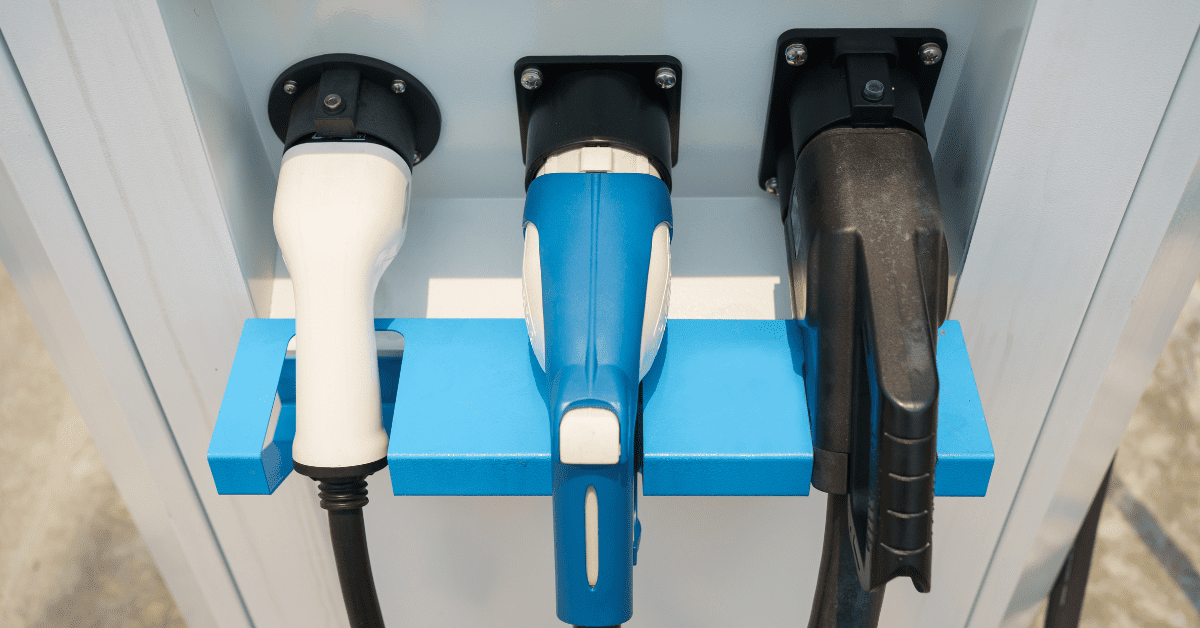
Imagine road-tripping in your new Rivian R1S and pulling into a busy Walmart off I‑80. You’ve got 12% left, kids are hungry, and you’re staring at a charging site with a mix of plugs, adapters, “out of order” screens, and a line that isn’t moving. One stall has a big CCS1 handle that looks like it was designed by someone wearing boxing gloves. Another stall has the smaller Tesla connector. One says “Magic Dock.” Another says “NACS.” Your car’s port? Maybe it’s native SAE J3400, maybe it’s legacy CCS, maybe you’re living that adapter life.
That’s the 2026 reality: the hardware is converging, the vehicles are converging, but the transition period 2025-2027 is still messy enough to create real range anxiety for normal drivers and expensive downtime for fleets.
So, NACS vs CCS; which one is actually “winning” in North America right now? And more importantly, which one matters for your next EV, your fleet electrification plan, or your charging site budget?
Here’s the thing: “NACS” isn’t just a brand name anymore. The North American Charging Standard is now SAE J3400, with a clear standards path and rapidly expanding DC fast charging support. CCS1 (the North American flavor of the Combined Charging System) isn’t dead, but it’s now the legacy port on a growing share of the on-road fleet. Adapters bridge the gap, but adapter reliability and heat management are real topics at 250–350 kW, especially in summer, especially when cables are stiff and connectors are worn.
I’ve spent years working with OEM programs and charge point operators on connector strategy, station design, and uptime. The biggest takeaway in 2026 is simple: the plug matters less than people think for peak kW, and more than people think for everyday usability, access to the Supercharger network, and how future-proof your vehicle feels two winters from now. Let’s break it down.
What Is NACS?
NACS started as Tesla’s proprietary charging interface, commonly called the Tesla connector. For years, it was “Tesla-only” in practice, even though Tesla built the biggest and most consistent fast-charging footprint in the country.
The shift began in 2022–2023 when Tesla published the connector design and encouraged broader adoption. That move kicked off a chain reaction: automakers wanted access to Tesla sites, drivers wanted fewer apps and fewer broken stalls, and CPOs wanted a connector that customers actually liked using with one hand.
Standardization was the big moment. In September 2024, SAE International standardized NACS as SAE J3400, which matters because it turns “a Tesla plug” into an industry-defined interface with clearer compliance and test paths. For station builders and OEMs, that reduces risk. For regulators and funding programs, it makes NACS a legitimate target for infrastructure requirements.
Electrically, J3400 supports AC and DC charging in the same compact form factor. On the DC side, the industry’s moving toward higher current and higher voltage support on new hardware, including 1000V architecture capability on next-gen equipment. NACS V4-style deployments with liquid-cooled cables are showing up in more places, designed to make 500A-class charging less painful for humans and less stressful for copper.
And yes, NACS is also tied into better user experience features when implemented well, including Plug and Charge (when the vehicle and network actually support it and don’t half-implement the certificate flow). The standard doesn’t guarantee a perfect experience, but it’s enabling the direction the market wants.
What Is CCS (CCS1 in North America)?
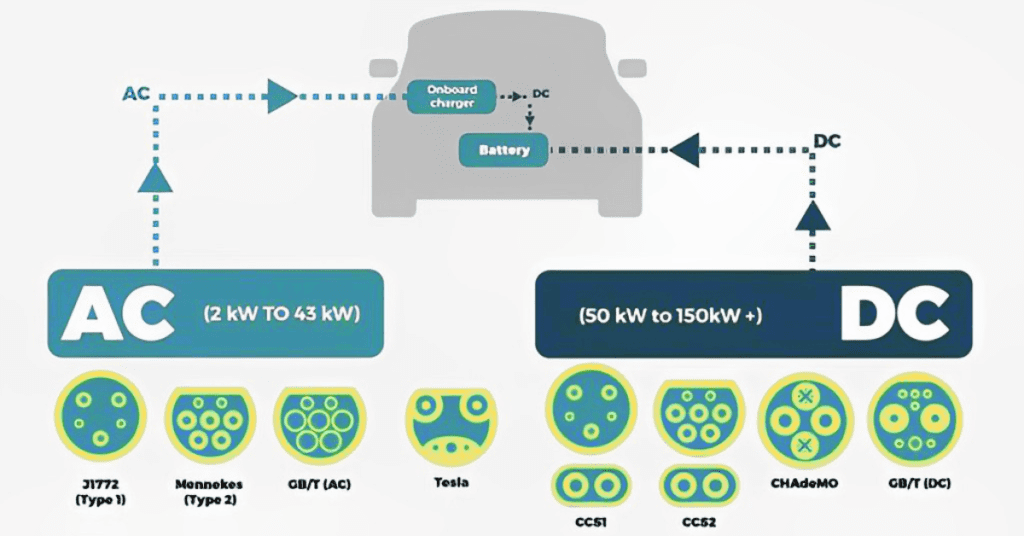
CCS is the Combined Charging System & CCS1 is the North American connector variant. Think of CCS1 as a J1772 AC plug with two large DC pins added below it. For much of the 2018–2024 era, CCS1 was the default for non-Tesla EVs in the U.S. and Canada, backed by ecosystems like CharIN and used by many OEMs and charge point operators.
CCS1 has solid engineering behind it, and it was designed to scale into high-power charging. It’s used on a massive installed base of vehicles still on the road in 2026. That matters: legacy doesn’t mean irrelevant when millions of zero-emission vehicles are already out there.
Where CCS1 has taken real reputational hits is less about the connector physics and more about field execution: station uptime, payment flow, cable strain, and the very real Electrify America reliability issues drivers have complained about for years. Some of that is improving, but drivers remember bad experiences. Fleets remember missed routes and support tickets.
CCS1 also has a bulkier handle and a latch feel that can be annoying in snow, ice, and tight parking layouts. I’ve had fleet drivers tell me they hated wrestling CCS plugs at 5 a.m. in January, especially when the cable was cold-soaked and the pedestal was placed too far forward.
Head-to-Head Comparison Table
| Connector design/size/weight | Smaller, lighter, easy one-hand insertion; cleaner cable management | Larger, heavier handle; more strain on cable and user |
| Pins | Compact multi-use pins for AC/DC in one interface | J1772 AC pins + 2 dedicated DC pins (combined format) |
| Max power/voltage/current 2026 | Deployments trending toward 500A+ and 1000V-capable hardware on newest sites (especially “V4-class” builds); real-world varies by site | Commonly 400V-class with 350A–500A in the field; 800V support exists on many 350 kW sites but not always delivered consistently |
| Charging speed real-world | Often limited by vehicle curve; strong consistency at Tesla sites; high-power improving with liquid-cooled cables | Can be very fast on good 350 kW sites; variability still a pain point at some networks |
| Compatibility/adapters | Native on most 2026+ North American EVs; adapters used for older CCS cars | Native on older non-Tesla EVs; adapters needed to use NACS-only sites |
| Network availability USA 2026 | Supercharger network is the anchor; growing NACS at EVgo, Electrify America, BP Pulse; more dual-cable stations | Large installed base of CCS1 dispensers; still common at legacy sites and many NEVI builds |
| Reliability/durability | Smaller connector, less user torque; strong real-world track record at Tesla sites | Hardware can be durable, but field issues often tied to station maintenance, cable stress, and payment/software |
| Cost to OEMs/CPOs | OEMs benefit from single-port strategy; CPOs incur retrofit/dual-cable costs during transition | CPOs already have CCS inventory; OEMs face adapter/dual-port customer support during transition |
| Future outlook | Default for new North American vehicles; expanding DC fast charging deployment | Gradually becomes legacy vehicle support; persists for years due to fleet and installed base |
Charging Speed & Power – Is NACS Faster in 2026?
The spicy claim online is “NACS is faster.” The honest answer is: sometimes, but not because of the plastic shape.
Charging speed is controlled by four things:
- The vehicle’s battery voltage and thermal limits
- The vehicle’s charging curve (how long it holds peak power)
- The station’s power electronics and current limits
- Heat management at the connector and cable
In 2026, NACS sites are increasingly built with higher current capability and better thermal design, including liquid-cooled cables on high-power dispensers. That helps sustain high current without excessive connector heating. People have seen overheating reports above ~300 kW on some combinations, but it’s trending better as hardware matures and as UL 2251 compliance and field learnings push better contact design and temperature monitoring.
CCS1 can also deliver excellent performance. A well-maintained 350 kW CCS dispenser paired with an 800V vehicle (think Hyundai or Kia E-GMP family behavior) can be very quick from 10–60%. The problem has been consistency: a “350 kW” label doesn’t always mean 350 kW today, on that stall, with that cable, with that thermal state.
What I tell fleet operators is boring but true: pick the ecosystem that delivers repeatable sessions with minimal resets. Five minutes lost per charging stop doesn’t sound like much until it happens twice a day across 80 vehicles.
Also, watch voltage. The push toward 1000V architecture is real, especially for next-gen trucks, performance EVs, and commercial platforms. NACS hardware that’s built for higher voltage and higher current will matter more over the next few years than the connector debate itself.
Connector Design & User Experience – Why Drivers Prefer One
Drivers don’t write poems about ISO standards. They talk about whether the plug “just works.”
NACS wins on ergonomics. It’s smaller, lighter, and easier to insert. In tight stalls, that matters. In cold weather, it matters more. And for accessibility, the lower insertion force and reduced cable weight are a big deal.
CCS1 isn’t unusable, but it’s clunky. The handle is larger and the cable management at many sites is rough, with stiff, heavy runs that pull the connector downward. And when a connector gets slightly worn, the user experience goes downhill fast: wiggling, reseating, “try again,” and suddenly you’re on the phone with support.
There’s also the mental load. Tesla built a reputation for simple plug-in-and-go. Not perfect, but straightforward. As more non-Tesla vehicles from Ford, GM, Rivian, Hyundai, Kia, and Genesis ship with native J3400 ports, expectations are shifting. Drivers want that same simple flow everywhere.
Plug and Charge is part of this story too. When done right, it reduces app juggling and payment failures. When done wrong, it creates “authentication loops” that feel like the charger is haunted. NACS doesn’t magically fix that, but the market momentum is forcing networks to tighten their software and back-end integrations.
Network Access & Infrastructure Reality Check 2026 (Tesla Superchargers vs Electrify America/EVgo/BP Pulse, adapter needs, NEVI impact)
Let’s be real about this: network access is why NACS took over.
The Supercharger network has scale and, more importantly, a track record of usability. As of 2026, there are well over 30k Supercharger ports in North America open to non-Tesla drivers through either Magic Dock sites or native access for approved vehicles. That number moves constantly, but the direction is one-way.
Magic Dock is Tesla’s built-in adapter solution: a Supercharger stall with a NACS plug that can also dispense a CCS1 connector via an integrated docked adapter. For CCS drivers, Magic Dock is a lifesaver on certain corridors. The experience isn’t identical to native, but it’s generally better than carrying a questionable adapter and hoping the latch tolerances are happy that day.
Non-Tesla networks aren’t standing still. EVgo NACS rollout is real, and the company has been public about scaling beyond early pilots toward hundreds of NACS-equipped stalls by end-2026. Electrify America is also adding NACS cables at many sites while trying to address uptime and power-sharing complaints. BP Pulse is in the mix too, especially around travel centers and retail hosts.
NEVI program requirements add another layer. NEVI-funded stations have pushed for broad compatibility during the transition. In practice, that often means dual-cable dispensers (CCS1 plus NACS) or a clear path to serve both port types. The Department of Energy/AFDC data and the Alternative Fuels Data Center stats have made it easier for planners to see corridor gaps, but building the stations is still slower than drivers want.
So what does a driver see on the ground in 2026?
- More NACS cables showing up at non-Tesla sites
- Plenty of CCS1 still installed because the vehicle fleet still needs it
- A growing expectation that new stations should serve both during the transition period 2025-2027
Automaker Adoption & What It Means for New Buyers
If you’re buying a new EV in 2026, the port choice is increasingly made for you.
Most 2026+ model-year vehicles from major brands have moved to native NACS (SAE J3400) in North America, including big-name volume players and newer EV-first companies. Ford and GM led the public announcements early, Rivian moved fast, and Hyundai/Kia/Genesis are now shipping native J3400 ports on many North American builds.
For buyers, this is less about ideology and more about fewer accessories, fewer edge cases, and better resale confidence. A native port reduces adapter dependency. That reduces support calls, customer frustration, and weird thermal derates caused by extra contact interfaces.
For OEMs, there’s also cost and packaging. A smaller inlet can simplify charge port door packaging and wiring routing. On high-volume platforms, small savings add up.
For fleets, standardization is gold. When a mixed fleet has two connector types, every depot and every public charging plan becomes twice as complicated. I’ve seen fleets save thousands in downtime and driver labor simply by standardizing vehicle procurement around one port and one primary network strategy.

Adapters – Bridge or Bottleneck?
Adapters are both. And anyone saying “adapters are fine, stop worrying” probably hasn’t watched 20 drivers queue behind a single stall while one adapter keeps faulting.
There are two main directions:
- CCS vehicle → NACS charger (common for older CCS1 cars accessing Superchargers)
- NACS vehicle → CCS charger (common for new NACS cars using legacy CCS1 dispensers)
Tesla-approved adapters tend to be the safest bet because they’re designed around known electrical and thermal assumptions, and because Tesla can enforce constraints through software on supported vehicles. Third-party adapters (yes, including brands like Lectron) can work, but adapter reliability varies. Tolerances, temperature sensing, and contact plating quality matter a lot when pushing high current for 20 minutes straight.
Pros of adapters:
- Immediate access to more stations
- Useful during the 2025-2027 transition period
- Can reduce range anxiety for corridor travel
Cons:
- Another failure point (mechanical fit, latch mismatch, contact heating)
- More thermal interfaces means more heat risk at high current
- Adds complexity for fleets (inventory, loss, training, inspection)
Safety-wise, treat adapters like critical power components. Keep contacts clean, avoid using damaged units, and don’t ignore “warm connector” warnings. Heat buildup is usually a symptom: worn contacts, misalignment, or a cable that’s been abused.
Future-Proofing: Should You Care About NACS vs CCS When Buying?
Care, yes. Panic, no.
If buying new in 2026, a native J3400 (NACS) port is the safer long-term bet in North America. It aligns with where OEMs are shipping, where CPOs are investing, and where drivers are voting with their charging sessions.
But CCS1 won’t vanish overnight. The installed base is huge. Many NEVI sites will keep CCS1 for years, and many existing stations will be maintained because it’s cheaper than ripping them out. For a used EV shopper, a CCS1 vehicle can still be a good value if the local charging mix supports it and if Supercharger access is available through approved paths.
For fleets, I look at route maps and dwell time. If routes depend on highway fast charging, prioritize vehicles and networks that reduce session failures. If charging is mostly depot-based, the public connector standard matters less, and bidirectional charging considerations (V2G/V2L potential) can matter more depending on duty cycle and utility programs.
One more nuance: not every “NACS car” charges the same. The port is just the handshake point. Battery preconditioning, thermal management, and charging curve design are what decide whether a vehicle is pleasant on long trips.
Frequently Asked Questions
Is NACS faster than CCS in 2026?
Not by default. NACS and CCS1 can both support high-power DC fast charging. Real-world speed depends on the vehicle’s charging curve and the station’s current/voltage capability. NACS sites often feel faster because session success and consistency are better at many Supercharger locations.
Can CCS cars use NACS chargers?
Yes, often. Many CCS1 vehicles can access supported NACS fast chargers using a manufacturer-approved adapter, and some Tesla sites use Magic Dock to provide CCS1. Compatibility depends on the car brand, software enablement, and the specific charging site.
Will CCS1 disappear in North America?
No, not soon. CCS1 is becoming legacy for new vehicle sales, but it will persist for years because millions of CCS1 vehicles remain on the road and many NEVI program stations must serve broad compatibility during the transition.
Which connector is better for road trips?
In 2026, NACS has the edge for road trips mainly due to Supercharger network coverage and reliability. If a driver is in a CCS1 vehicle, choosing routes with Magic Dock sites or confirmed compatible Superchargers can reduce risk.
Are adapters safe for high-power charging?
Quality matters. Tesla-approved adapters generally have better validation and tighter integration. Third-party units vary, and heat issues can appear at high current, especially above ~250 kW. Inspect adapters regularly and stop using any that show damage or looseness.
What about Europe? Is NACS used there?
Europe is different. CCS2 is the dominant standard there, and North American NACS (SAE J3400) isn’t the main path. This article is focused on North America, where J3400 has become the default for new vehicles.
Is NACS better for fleets?
Often yes, because standardizing reduces training and operational friction, and Supercharger access can cut downtime on routes. But fleets should map duty cycles first. Depot charging strategy, utility demand charges, and service-level agreements with charge point operators can matter more than the connector.
Does NACS support bidirectional charging?
The connector and standards work are compatible with bidirectional charging in concept, but real V2G/V2L potential depends on the vehicle, inverter, and ecosystem support. Don’t buy a vehicle assuming V2G will work just because the port is J3400.
How do I check if my EV is NACS or CCS?
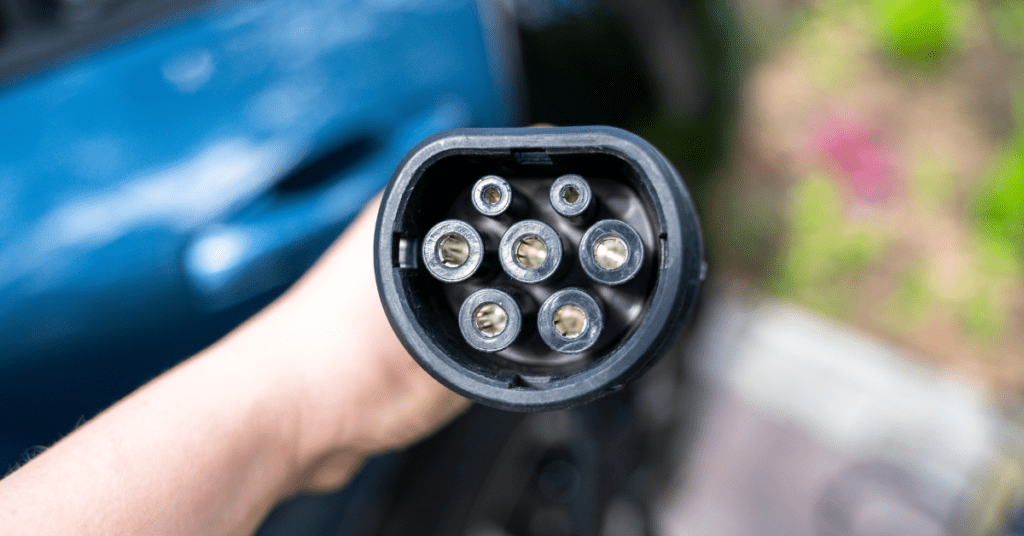
Look at the inlet: NACS is a compact oval-ish port with two main power pins; CCS1 looks like J1772 with two large DC pins below. Also check the window sticker, owner’s manual, or your OEM app. PlugShare check-ins can confirm what people actually used at your local stations.
Should I avoid buying a used CCS1 EV in 2026?
Not necessarily. A used CCS1 EV can be a bargain if local CCS infrastructure is solid and if Supercharger access is available via supported adapters or Magic Dock. Just budget for adapter costs, and test your most-used stations before committing.
Conclusion
By 2026, NACS vs CCS isn’t a theoretical standards argument anymore. It’s lived experience. NACS (the North American Charging Standard, now SAE J3400) is the direction of travel for new North American EVs, and it’s pulling the infrastructure market with it. CCS1 remains essential for the legacy fleet, and it will be around for a long while, but the center of gravity has shifted.
If you’re buying new, a native J3400 port is the simplest way to reduce charging friction and future-proof daily driving. If you’re running a fleet, standardize early where it makes operational sense, and be picky about networks that deliver consistent sessions, not just big kW numbers on a sticker.
Check your next EV’s port, confirm Supercharger access rules for that model, and use tools like PlugShare to sanity-check the stations on your real routes. And if you’ve had adapter wins (or horror stories), share them in the comments. Your experience helps the next driver avoid a 2% battery panic at a broken stall.
Level 1 vs Level 2 EV Charging Guide