

I still remember standing in a loud factory years ago and watching a motor get hotter and hotter every week. The voltage and current were both fine, but the bearings were failing like clockwork. The bad guy wasn’t something you could see on a simple meter; it was harmonic distortion. The motor finally cooled down after we installed the correct filter. Since then, I’ve been almost obsessed with this problem that is right in front of me.
If you work with three-phase equipment, compressors, or variable-frequency drives, harmonics are slowly eating away at your power system. Let’s discuss what they really are, why they cost money, and how to prevent them from burning out more motors.
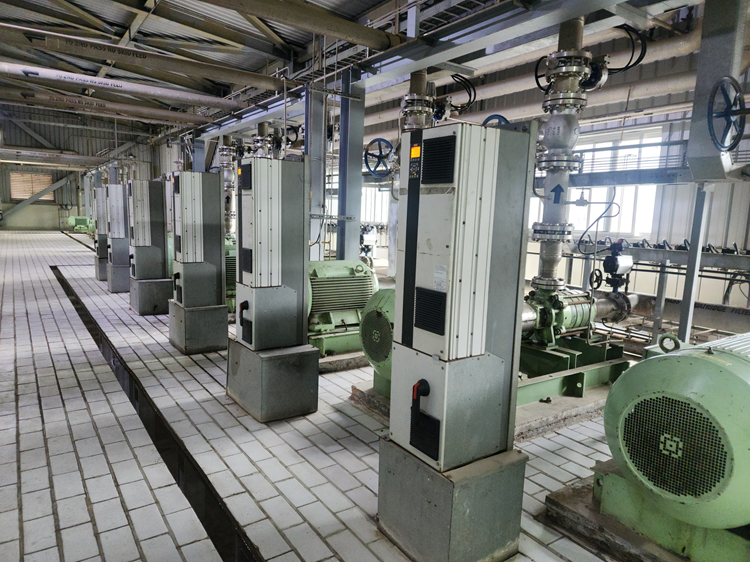
Figure 1: Variable Frequency Drive (VFD) commonly used in industries.
What Harmonic Distortion Really Is (Without the Numbers)
Electricity tends to move in a clean sine wave, which occurs 60 times per second in the U.S. But not all of the gear works together. VFDs, rectifiers, UPS units, and computer supplies are examples of devices that use power in chunks instead of continuously. These devices chop that perfect wave into strange shapes.
Harmonics are the extra little bumps in frequency that ride on the sine wave. Harmonic distortion occurs when all these frequencies add up.
THD, or Total Harmonic Distortion, tells you how messy the wave has become. A THD of less than 5% indicates that the signal is clean and distortion-free. As the temperature rises, vibration increases, and efficiency drops.
Why It Matters: Money, Heat, and Noise
Every harmonic current makes wires, transformers, and motors even hotter. Think of it as electrical cholesterol: too much of it makes everything run slowly and hot.
- Increases the temperature of the motor and shortens the life of the insulation.
- It causes transformers to overheat and reduces their capacity.
- Causes circuit breakers to trip for no reason.
- Changes the voltage in a way that causes sensitive electronics to malfunction.
- Because the grid has to push more current to do the same work, your energy bill goes up.
The scary part is that harmonics typically do not show up on a basic clamp meter. You need a THD meter or a power analyzer to see them clearly.
What Causes Harmonics in Industrial Power Systems
- Variable-frequency drives (VFDs), rectifiers, inverters, UPS systems, and LED lighting are examples of non-linear loads.
- Welders and induction heaters that get power in short bursts.
- Computers, printers, and chargers are examples of office equipment.
- Heavy industry uses arc furnaces.
When many of these devices connect to the same bus, they start sending distorted current through the entire system. The waveform becomes uglier as the load increases.
Put in a picture: A diagram that compares a clean sine wave to a distorted waveform
Main Harmonic Frequencies to Keep an Eye On
| Harmonic Order | Typical Source Equipment | Common Effect in Systems with 3 Phases |
|---|---|---|
| 3rd (180 Hz) | Electronics, computers, and lighting. | Adds neutral current and overheats wires. |
| 5th (300 Hz) | VFDs, rectifiers. | Causes motor vibration and torque ripple. |
| 7th (420 Hz) | Drives, inverters. | Heating in transformer windings. |
| 11th–13th + | Large UPS systems, arc furnaces. | Flicker and voltage distortion. |
When these strange-order harmonics mix, they can double the current in the neutral line or triple the heat load on a transformer.
The Effect on Motors and Transformers
Harmonics alter the magnetic field around the rotor, resulting in uneven torque. You can feel it as a vibration or humming that shouldn’t be there. It uses more energy and breaks down insulation faster than usual. IEEE and NEMA studies show that every 10 °C rise in temperature cuts the life of insulation in half.
Transformers: They are even more sensitive. Harmonic currents cause additional core losses in transformers because they respond to changes in the frequency of the alternating current. The result was overheating, noise, less capacity, and finally failure. That’s why K-rated transformers are made. They can handle harmonic currents without overheating.
Put in a picture: Industrial transformer with a thermal camera that shows hot spots.
How to Check and Measure Your THD
You can’t fix something if you can’t see it. So, the first step is to measure THD.
| Tool | Common Use | Cost Range (USD) |
|---|---|---|
| Power quality meter that clamps on | A quick check of THD current and voltage in the field | $400–$1,200 |
| Portable Power Analyzer | Logging and reporting of detailed waveforms | $2,500–$6,000 |
| System for permanent monitoring | Tracking and alarms all the time | $8,000 + installation |
Check for IEEE 519 compliance: Most of the time, THD voltage at the PCC (point of common coupling) should be less than 5%.
Put in a picture: Technician using a clamp meter to check THD.
Ways to Cut Down on Harmonic Distortion
| Method | How It Works | Range of Estimated Costs (USD) |
|---|---|---|
| Filter that doesn’t do anything | Uses inductors and capacitors that are tuned to cancel out certain harmonics | $1,000–$10,000 |
| Harmonic filter that is always on | Puts in equal and opposite currents to get rid of distortion (active filter) | $10,000–$40,000 |
| Line reactors/chokes | VFDs draw a steady current and cut THD by 30–40% | $300–$800 |
| K-rated isolation transformer | Can handle extra heat from harmonics without getting too hot | $2,000–$15,000 |
Many stores start with line reactors because they are inexpensive and easy to install. But if your THD is over 5%, an active filter is worth every penny.
Put in a picture: Active harmonic filter panel that hangs on the wall.
Example from the Real World: Factory ROI
When our client in Michigan, who makes motors, put in a 250 kVAR active harmonic filter, their THD went from 18% to less than 4%. The total cost of the project is $11,000. It paid for itself in about nine months because it saved energy and needed less maintenance. After a year, they’d saved nearly $15,000 in downtime and energy costs.
Standards and Compliance in the Industry
IEEE Std 519‑2014 tells you everything you need to know about harmonic distortion limits for public and industrial systems. It says that your voltage THD should be less than 5% and your current THD should be between 5% and 20%, depending on the size of your system.
The IEC 61000 family of standards is Europe’s version, but it is slightly stricter for homes and offices. Utilities often include those IEEE limits in service agreements. If you exceed them, you can expect penalties for poor power quality or the cost of rectifying the issue.
The Cost of Not Paying Attention to Harmonics
Let’s be honest: doing nothing can be costly. According to data from the DOE and utilities, harmonics can result in a 3–10% loss of energy.
That’s about how much it costs for a factory to run with an average load of 400 kW at $0.12/kWh:
| Extra Power Lost (%) | Extra Power Lost (kW) | Extra Cost per Year (USD) |
|---|---|---|
| 3% | 12 | $5,040 |
| 5% | 20 | $8,400 |
| 10% | 40 | $16,800 |
With shorter motor life, transformer overheating, and nuisance trips, you could easily be spending tens of thousands of dollars a year.
Add picture: Harmonics caused the motor’s winding to burn.
The Bottom Line
Harmonic distortion isn’t just an engineering term; it’s a silent load eater. You should check the total harmonic distortion if your plant has a high number of VFDs, UPS systems, or LED drivers. Adding a line reactor or opting for an active filter can help you save money on energy bills, heating costs, and potential breakdowns.
And if you ever hear your new motors humming a tune, don’t ignore it. That’s harmonics singing — and they aren’t very good at it.
FAQ: Fast Answers to Common Questions
- What does harmonic distortion mean in simple terms?
When non-linear loads like VFDs or rectifiers change the electrical current or voltage wave from its ideal sine shape, this happens. - How much THD is safe for most places?
The IEEE 519 standard says that voltage THD should be less than 5% and current THD should be less than 20%, depending on the size of the system. - What do harmonics do to motors?
They make more heat, vibration, and torque pulses that hurt the insulation and bearings. - What do harmonics do to transformers?
They raise eddy‑current losses and core heating, which means the transformer can’t work at its full capacity. - Can harmonics cause a capacitor bank to blow?
Yes. If its resonant frequency matches a dominant harmonic, current surges can blow up the capacitors. - What makes VFDs make harmonics?
Their rectifier circuits turn the current on and off quickly, breaking up the sine wave. - How can I tell if my plant has harmonics?
Use a power quality analyzer that shows THD% and the harmonic spectrum for both voltage and current. - What are the differences between THD and TDD?
THD looks at how harmonics compare to the basic current. TDD compares them to the rated system current, which is helpful for load analysis. - What is a transformer with a K rating?
It has thicker wires and better insulation, so it can handle harmonic currents without overheating. - Do LED lights make harmonics?
Yes, especially cheap drivers that don’t have filters. They pull in pulses of current. - Are harmonics only a problem in factories?
No. The same problems occur in office buildings with numerous electronics, but on a smaller scale. - Can harmonics cause circuit breakers to trip?
Yes. Thermal breakers can malfunction if there is excessive heat or current distortion. - What kind of equipment shows harmonic distortion on the screen?
Most modern VFDs and UPS systems show THD, and dedicated THD meters show the exact values. - How do you quickly lower THD?
Put line reactors on the VFD inputs or add a passive filter that is tuned to the fifth harmonic. - What is so important about the fifth harmonic?
It makes torque that goes against the motor’s rotation, which wastes energy. - How much does a harmonic filter panel cost?
From $3,000 for small units to $40,000 for large active systems. - How much energy can I save by fixing harmonics?
Typically, 3% to 10% off your total bill, along with extended equipment life. - Is there a way to check THD on the go?
Yes, several handheld meters can record voltage and current harmonics for extended periods of time. - Is it possible to test for harmonics without any gear?
Not really. You might notice things like lights flickering or hot neutrals, but you need an analyzer to get real data. - What will happen if I don’t pay attention to harmonics?
You will eventually have to pay more for energy, have your motor break down, and get fined by the utility. - What standard talks about harmonics?
In North America, the IEEE 519 standard is the one to use. In Europe, the IEC 61000 series is the one to use. - Does harmonic distortion affect power factor?
Yes. They’re linked; more harmonics usually mean a lower true power factor. - What is the difference between harmonics and power factor?
The power factor is the difference in phase between voltage and current. Harmonics are changes in the shape of those waves. - Are filters that work better than ones that don’t?
Yes, for big or changing loads. Active filters adjust their settings in real-time, while passive filters only operate at fixed frequencies. - Where can I find out more about THD standards?
Refer to IEEE 519 or the power quality handbook provided by your local utility. Many utility websites have these for free.
